
Filamentous algae are the long, stringy green strands that tangle into floating mats and blanket the surface of community lakes across the Gulf and the wider Middle East. Often called string algae or blanket weed, they begin life on the lake bed and on submerged walls, then rise on trapped oxygen bubbles to form thick green rafts that cling to shorelines, fountains and inlet screens. They are not the same problem as pea-green water or toxic blue-green algae, and they respond to a different mix of controls. Left alone through the long, sunny Middle East growing season, these mats spoil the look of a development, choke pumps and irrigation lines, and set up a serious oxygen crash when they finally die back. This guide explains why filamentous algae form, the risks they carry for property and facilities teams, and how to bring them under control.
What filamentous algae actually are
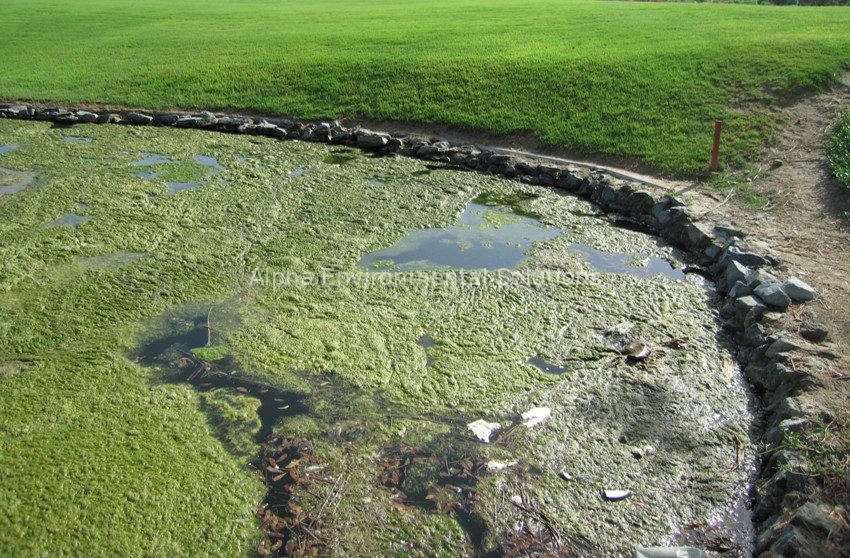
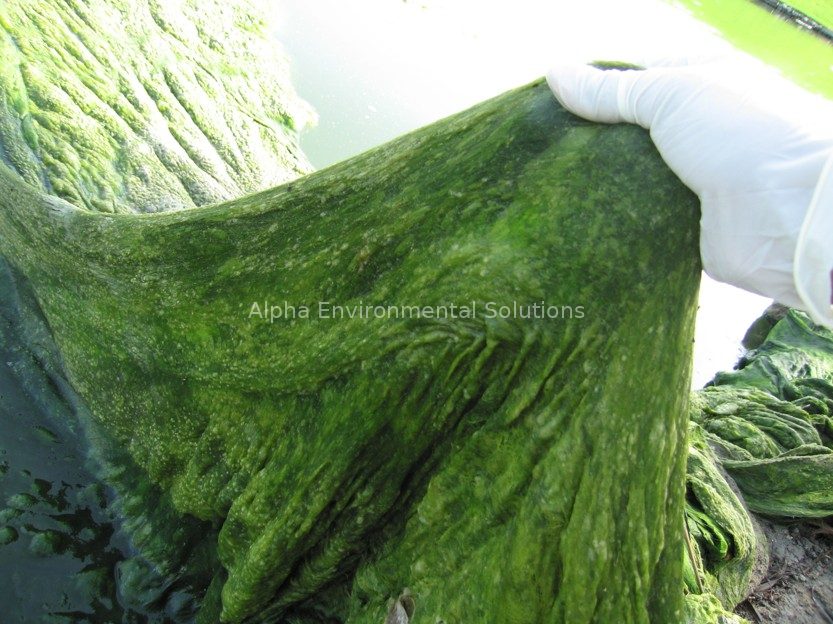
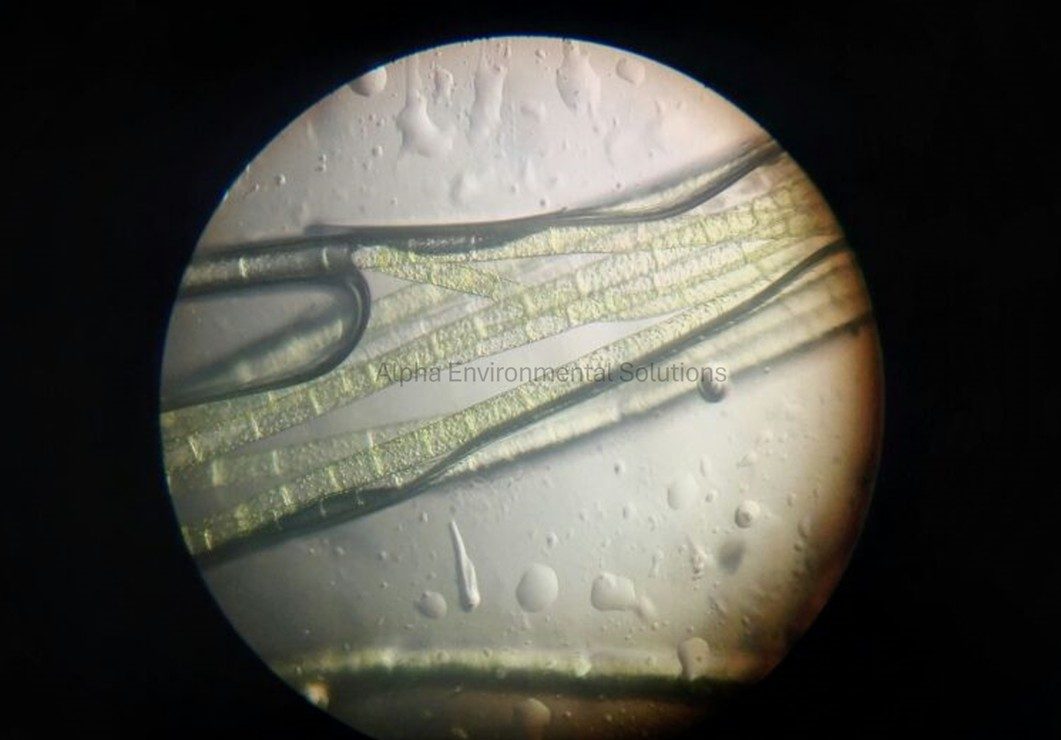
Filamentous algae are made of single cells that join end to end into long, hair-like filaments. Unlike planktonic algae, which stay suspended and turn water a cloudy green, filamentous strands weave together into visible mats you can lift with a rake. The types most often seen in ornamental and irrigation lakes include Spirogyra, which feels bright green and slimy, Cladophora, which has a cotton-like texture, and Pithophora, which is coarse like horse hair.
The mats usually start on the lake bottom and on submerged rocks, liners and pipework. As the algae photosynthesise in strong sunlight, oxygen bubbles collect inside the tangled filaments and lift whole sheets to the surface. This is why a lake can look clear one morning and be covered in green rafts by afternoon, and why the mats sometimes seem to vanish after rain or overnight, when the trapped gas escapes and the strands sink again.
It helps to separate three problems that often get lumped together. Planktonic green water is a suspended bloom that clouds the whole water column, which we cover in our guide on why community lakes turn green. Blue-green algae, or cyanobacteria, can release toxins and must be treated as a health risk, explained in blue-green algae in community lakes. Filamentous algae sit apart: they are usually not toxic, but they are a stubborn nuisance and, in bulk, a real oxygen hazard.
Why filamentous algae thrive in Middle East community lakes
The Middle East gives filamentous algae almost everything it wants. Intense sunlight and warm water drive photosynthesis for most of the year, and many community and irrigation lakes are closed or slow-moving systems with little natural flushing. What tips growth from a thin fringe into a full surface mat is nutrients, chiefly phosphorus and nitrogen.
Those nutrients arrive from several familiar sources. Treated sewage effluent (TSE) used to top up ornamental lakes carries a steady nutrient load, which we cover in detail in recycled water in community lakes. Fertiliser washed off surrounding landscaping, grass clippings and leaf litter, and droppings from resident waterfowl all add more. Decaying sludge on the lake bed then recycles phosphorus back into the water, feeding the next generation of algae. In a shallow, sunlit, nutrient-rich lagoon with weak circulation, a filamentous algae problem is close to inevitable without active management.
The risks: from eyesore to compliance failure
A green mat is first a reputation problem. For a residential community, a retail lake or a hotel lagoon, floating scum and rotting weed along the water’s edge undermine the premium look residents and guests expect. The risks, though, run deeper than appearance.
Large mats block sunlight to the water below, clog pump intakes, fountain nozzles and irrigation filters, and trap litter and debris against the shoreline. The most serious risk comes at the end of the mat’s life. When a big volume of algae dies, whether naturally as conditions change or after a heavy algaecide dose, bacteria break it down and strip oxygen from the water. That can trigger a fish kill and a wave of foul, rotten-egg odour, covered in our guides on summer fish kills and, for the seasonal oxygen risk, autumn lake turnover.
There is a regulatory dimension too. In Dubai, the Municipality’s Environmental Clearance guidance sets water-quality limits for man-made lagoons in Annex 6, covering 31 parameters. Several are directly affected by heavy algae: dissolved oxygen must sit between 5 and 15 mg/L near the surface and stay above 4 mg/L at the bottom, turbidity is capped at 75 NTU, total suspended solids at 50 mg/L, and there is a specific surface plankton limit. A lake choked with filamentous algae swings sharply in oxygen between day and night and can breach these limits. Where a water body fails its thresholds or shows a pest or nuisance problem, the operator can face fines and, in some cases, a closure order until the issue is fixed. Confirming a lake meets the rules through proper environmental consultancy and compliance support is far cheaper than a compliance failure.
How to bring filamentous algae under control
There is no single button that clears filamentous algae for good, because the mats are a symptom of an over-fertilised, poorly circulated lake. Lasting control combines quick physical removal with treatment of the underlying cause. A practical programme usually includes:
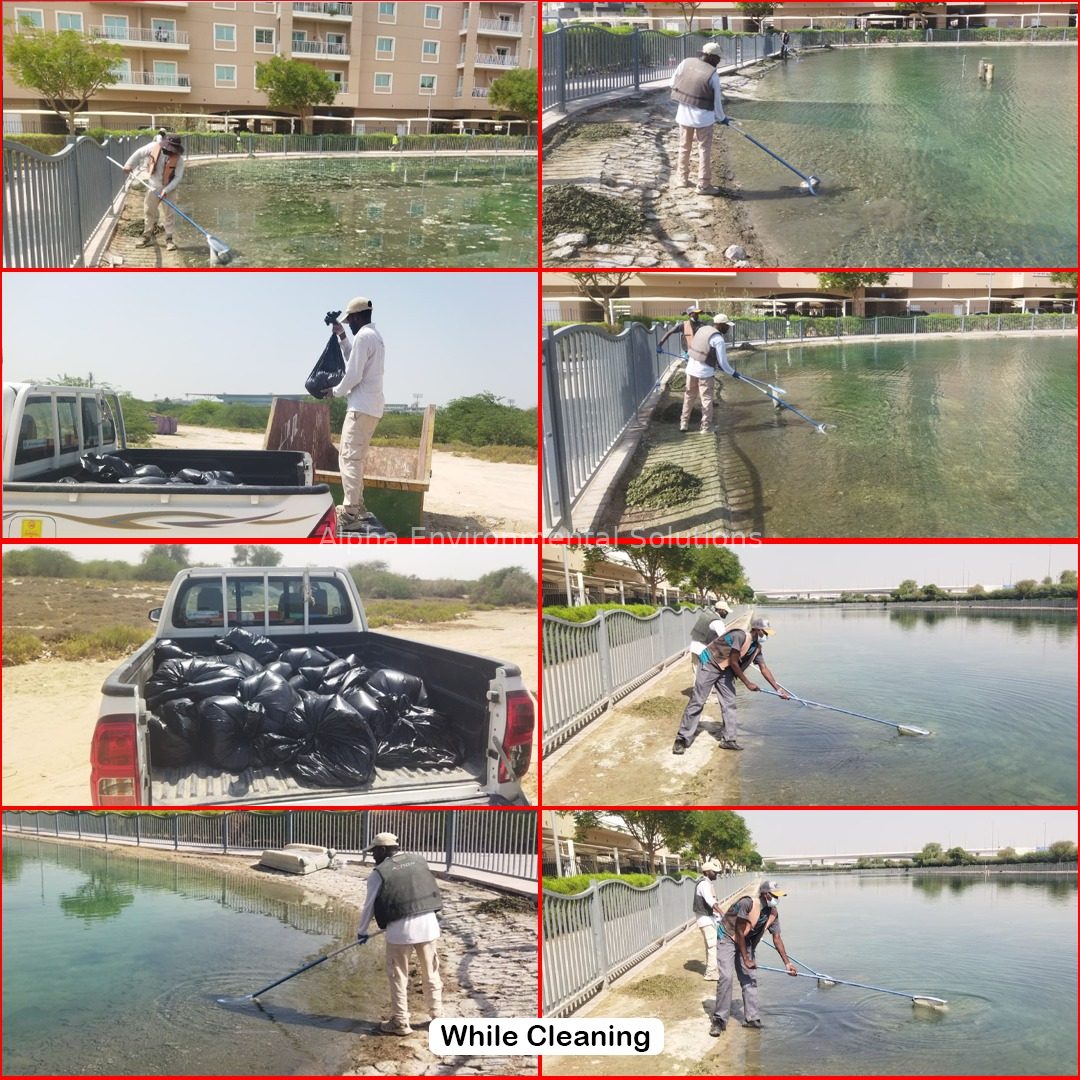
- Mechanical removal: rake or net the mats out and, importantly, dispose of them well away from the water so their nutrients do not wash straight back in as they rot.
- Aeration and circulation: adding oxygen and movement with fountains or diffused-air systems raises dissolved oxygen, discourages the stagnant, sunlit conditions filamentous algae prefer, and protects fish when mats die back.
- Nutrient management: cut the phosphorus and nitrogen feeding the lake by controlling TSE top-up quality, keeping fertiliser and clippings out of the water, and removing accumulated sludge that recycles nutrients from the bed.
- Water-quality monitoring: regular testing of dissolved oxygen, nutrients and clarity catches a build-up early, before it becomes a full surface mat.
- Targeted, professional treatment: where an algaecide is justified, apply it carefully and in stages, so a sudden mass die-off does not crash the oxygen it was meant to protect.
Alpha Environmental Solutions has worked on community and irrigation lakes across the UAE and the wider Middle East since 2007, and the most durable results come from combining these steps rather than relying on any one of them. Physical clearance handles the visible problem this week; aeration systems and sludge removal tackle the conditions that let the mats return; and ongoing lake weed and algae control keeps the water on the right side of the guidelines.
Why the timing matters now
Season shapes the risk. Through the long Middle East summer, filamentous algae builds steadily, reaching its heaviest surface cover in the warmest months. As the weather cools into autumn and the water begins to mix, large volumes of that algae can die back at once, and the decay draws down oxygen exactly when the lake is already under stress from turnover. Clearing mats and getting aeration working before that transition is one of the most effective ways to avoid an autumn fish kill and the odour that follows. Acting while the problem is still visible on the surface, rather than waiting for the water to turn, keeps both the lake and the compliance record intact.
Frequently asked questions
Is filamentous algae the same as the green water in my lake?
No. Green water is caused by microscopic planktonic algae suspended through the water column, which clouds the whole lake. Filamentous algae form visible stringy mats you can lift with a rake, usually starting on the bottom and rising to the surface. The two often occur together but need different handling.
Is filamentous algae dangerous?
Filamentous algae are usually not toxic, unlike blue-green algae (cyanobacteria). The main danger is indirect: thick mats swing oxygen levels sharply and, when they die and decay, can strip enough oxygen to kill fish and produce foul odour. Treat any blue-tinged, paint-like scum as a possible cyanobacteria risk instead.
Why do the mats appear and disappear from day to day?
The filaments trap oxygen bubbles from photosynthesis during warm, sunny days, which floats them to the surface. At night, or after rain disturbs the mats, the trapped gas escapes and the algae sinks again. The algae has not gone; it has simply dropped back below the surface.
Will an algaecide solve the problem on its own?
Rarely. An algaecide can knock back a mat quickly, but if the nutrients and stagnant conditions remain, it returns. A sudden large die-off also risks crashing dissolved oxygen. Algaecides work best as one carefully staged part of a plan that also includes removal, aeration and nutrient control.
How does filamentous algae affect DECCA or Dubai Municipality compliance?
Heavy algae drives large day-to-night oxygen swings and raises turbidity and suspended solids, which can breach the lagoon limits set in the Environmental Clearance guidance (Annex 6). A lake that fails its water-quality thresholds can face fines or a closure order until the problem is resolved, so early control protects both the water and the operator.
Keep your lake clear before the mats take hold
Filamentous algae will keep returning in a warm, sunny, nutrient-rich lake unless the causes are managed alongside the visible mats. A combined programme of physical removal, aeration, nutrient control and monitoring keeps a community lake clear, compliant and pleasant to live beside. If green string mats are building on your lake or lagoon, act before the autumn die-back turns a nuisance into a fish kill. Talk to Alpha Environmental Solutions about a lake assessment and a control plan built for your site. Call +971 4 338 6660, email info@alphasolutions.ae, or visit our contact page, and see our full lake management service for how we keep Middle East community lakes healthy through the year.