
As the Gulf’s peak summer heat begins to ease, many community lakes face a hidden hazard that has nothing to do with the algae blooms of high summer. It is called lake turnover: the sudden mixing of a lake that has spent months separated into a warm surface layer and a cold, oxygen-starved bottom layer. When cooling weather breaks that separation, the de-oxygenated water from the bottom rises and the dissolved oxygen across the whole lake can collapse within hours. For property developers, community managers and facilities teams across the UAE and the wider Middle East, autumn turnover is a common trigger for overnight fish kills, foul odours and green water, often on lakes that looked healthy the day before. This article explains why turnover happens, how to read the warning signs, and what to do now to protect your water body before the weather changes.
What lake turnover actually is
Lake turnover is a natural physical event, not a disease or a chemical spill. Through the hot months, strong sunlight heats the top of a lake far faster than the depths. The warm upper water is lighter, so it floats on the denser, cooler water below and the two layers stop mixing. This separation is called thermal stratification. The surface layer stays in contact with the air and with photosynthesising algae, so it holds oxygen. The bottom layer is cut off from both. Bacteria there keep consuming oxygen as they break down settled organic matter, and once that oxygen is gone the bottom turns anoxic, meaning effectively without oxygen. Turnover is the moment the two layers mix back together, typically twice a year in seasonal climates: once as water warms in spring and once, more sharply, as it cools in autumn.

Why community lakes in the Gulf stratify so strongly
Man-made amenity lakes, ornamental lagoons and irrigation reservoirs across the region are built for appearance and storage, not for natural circulation. Many are relatively deep in the centre, have steep-sided profiles, and sit still for long periods with little through-flow. Add months of air temperatures above 40 degrees Celsius and intense solar radiation, and the surface can run many degrees warmer than the bottom. That temperature gap drives a stable stratification that can hold for much of the summer. Over the same period, settled leaves, grass clippings, fish waste, dead algae and fine silt build a layer of nutrient-rich sludge on the bed. The thicker that sludge layer grows, the greater the oxygen demand at the bottom and the more severe the anoxic zone becomes. Lakes topped up with treated sewage effluent (TSE) carry an extra nutrient load that feeds the same cycle.
Why the autumn cool-down is the dangerous moment
Stratification stays stable only while the surface remains hot. As nights lengthen and air temperatures fall through autumn, the surface water cools, becomes denser and begins to sink. A single cool night, a rare rain event, a dust storm, or even switching on idle pumps can be enough to tip a marginally stratified lake into full mixing. When that happens, the anoxic bottom water, loaded with hydrogen sulphide, ammonia and dissolved nutrients, is dragged up and spread through the entire water column. The oxygen that was concentrated near the surface is now diluted across the whole depth. Average dissolved oxygen can drop below the level fish need to breathe, and it can happen overnight rather than over days. That is why a lake can look fine at dusk and show dead fish at dawn.

The warning signs to watch for
No single reading predicts a turnover, but a combination of these signs means a lake is primed for one and needs attention before the weather turns:
- A large temperature gap between surface and deep water when readings are taken, the classic marker of strong stratification.
- Very low or zero dissolved oxygen in samples drawn from near the bottom.
- A thick, black, foul-smelling sludge layer on the bed when it is probed.
- Sudden clouding, a grey or black tinge, or a sulphurous rotten-egg odour after a cool night or rain.
- Fish gasping at the surface at dawn, or crowding around inflows and fountains where oxygen is highest.
- A recent algae bloom, which adds a heavy oxygen demand as it dies back.
What a sudden turnover does to your lake
The most visible consequence is a fish kill. Most ornamental and stocked species come under stress once dissolved oxygen falls below about 3 milligrams per litre, and a rapid turnover can push a whole lake under that threshold at once, as we explain in our guide to summer fish kills in UAE community lakes. Beyond the fish, the event releases the chemistry that was trapped below. Hydrogen sulphide produces the rotten-egg smell that residents notice at once, while ammonia adds to the toxic load. There is also a longer tail: under low-oxygen conditions, phosphorus that was bound to the sediment is released back into the water, a process called internal loading. That freed phosphorus becomes fuel for the next bloom, so an autumn turnover can set up a green-water problem weeks later.
For a managed community, the sequence of dead fish, bad odour and green water is also a compliance and reputational risk. Dubai Municipality and the emirate’s environmental authorities monitor amenity water bodies against set physical, chemical and microbiological thresholds, and a lake that breaches them can face penalties or a hold on use until it is corrected. Routine water-quality monitoring is the difference between catching a problem early and explaining a fish kill to residents.
How to prepare a lake before the turnover
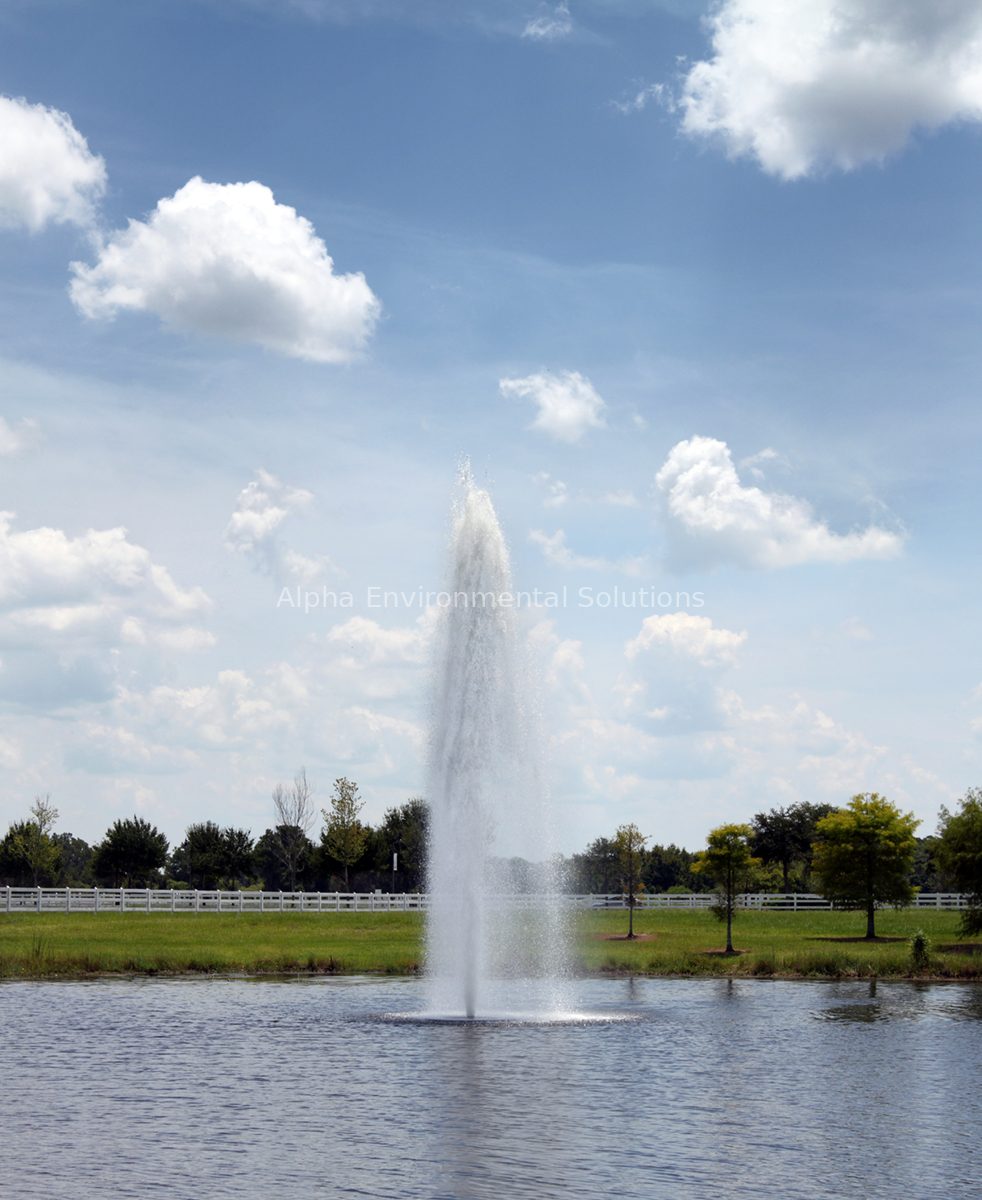
The aim is to stop stratification from forming in the first place, so there is no isolated bottom layer to mix up. That is what an aeration or destratification system does: it keeps the water column circulating and oxygenated from top to bottom all season, so the annual turnover becomes a gentle daily process rather than a sudden shock. The practical steps for the weeks before the seasonal change:
- Install or service a bottom-diffused aeration or destratification system sized to the lake volume and depth, and run it continuously through the transition.
- Measure the sludge depth and remove accumulated organic matter, which cuts the bottom oxygen demand at its source.
- Monitor dissolved oxygen and temperature at both surface and depth on a regular schedule through environmental consultancy and monitoring, so building stratification is caught early.
- Keep algae under control through active lake management, so a dying bloom does not coincide with a mixing event.
- Maintain gentle water movement near amenity areas with fountains, and avoid switching a long-idle aerator to full power into a strongly stratified lake, which can itself force a turnover.
Conclusion
Autumn turnover is predictable, and that is the opportunity. A lake that is aerated, has its sludge under control and is monitored through the seasonal change rarely suffers the overnight oxygen crash that catches unmanaged water bodies out. The time to act is before the first cool nights arrive, not after the fish surface. Alpha Environmental Solutions has managed community lakes, lagoons and irrigation reservoirs across the UAE and the wider Middle East since 2007, designing aeration systems, removing sludge and monitoring water quality so amenity water stays clear, safe and compliant. To assess your lake’s turnover risk before the season changes, contact Alpha Environmental Solutions on +971 4 338 6660 or info@alphasolutions.ae, or visit our contact page.
Frequently asked questions
When does lake turnover happen in the UAE and Gulf region?
Turnover is most likely during the autumn cool-down, as nights lengthen and surface water cools enough to sink and mix with the depths. In the Gulf this transition typically runs from around October into November, though a rain event, dust storm or cool spell can trigger it earlier. A weaker mixing can also occur in spring.
How does turnover kill fish if it eventually adds oxygen?
Turnover does re-oxygenate a lake in the end, but the danger is the moment of mixing. The oxygen that was concentrated in the thin surface layer is suddenly spread through the whole depth and diluted, while oxygen-consuming bottom water and sludge are stirred in. Average dissolved oxygen can fall below the roughly 3 milligrams per litre most fish need, sometimes within hours, before it recovers.
Can aeration prevent a turnover fish kill?
Yes, it is the main defence. A properly sized aeration or destratification system keeps the water circulating and oxygenated from top to bottom all season, so a strongly separated bottom layer never forms. Without that isolated layer there is no anoxic water to mix up, and the seasonal turnover becomes gradual rather than a shock.
Is a rotten-egg smell after a cool night a sign of turnover?
Often, yes. A sulphurous, rotten-egg odour is hydrogen sulphide, produced in the anoxic bottom of a stratified lake. When cooling weather mixes that water upward, the gas is released at the surface. A sudden smell after a cool night or rain, especially alongside clouding water, is a strong warning that a lake is mixing and that oxygen may be falling.
We top our lake up with treated sewage effluent. Does that make turnover worse?
It can. TSE carries nutrients that feed algae and add to the organic matter settling on the bed, which raises the oxygen demand of the bottom layer and deepens the anoxic zone during stratification. Lakes on TSE top-ups therefore benefit especially from continuous aeration, sludge control and regular monitoring through the seasonal change.