
When a community lake fills with dead fish overnight, the cause is almost always the same: the water ran out of oxygen. Across the UAE, summer fish kills peak between June and September, when air temperatures push past 45°C and shallow ornamental lakes heat up faster than they can recover. Warm water holds far less dissolved oxygen than cool water, so once levels drop below what fish need to breathe, large losses can occur in a single night. For property developers, community associations and facilities managers, a fish kill is more than a distressing sight for residents. It is a clear signal that the lake is already under stress and needs professional lake management.
Why summer heat pulls oxygen out of a lake
Oxygen dissolves less readily in warm water. As a lake heats through the day, its capacity to hold dissolved oxygen falls at the very moment biological demand for that oxygen is rising. Bacteria breaking down organic matter, algae respiring at night and fish themselves all draw on a shrinking supply. The result is a lake that looks calm on the surface while oxygen quietly collapses underneath.
The regional climate makes this worse. The UAE recorded a temperature of 49.4°C on 20 June 2026, and forecasters warned of a hotter-than-usual summer, with surface water across the region regularly exceeding 30°C from June to October. Shallow, man-made community lakes absorb this heat quickly, and many are already carrying heavy nutrient loads that fuel algal blooms and accelerate the oxygen problem.

The warning signs before a fish kill
Fish kills rarely happen without notice. In the days beforehand, a lake usually shows several of the following signs, and acting on them early is often the difference between a scare and a serious loss:
- Fish gulping air at the surface, especially at dawn (a classic sign of oxygen stress)
- A sudden, intense green or blue-green algal bloom, or a bloom that has just collapsed and turned grey or brown
- A foul, rotten-egg odour indicating oxygen-free conditions and sulphide near the bed
- Water that has turned murky, milky or unusually dark
- Fish crowding around inflows, fountains or any point where water is moving
What actually kills the fish
Several summer processes combine to drain oxygen. Heat causes the lake to stratify, forming a warm upper layer over a cold, stagnant bottom layer that receives no oxygen and becomes lifeless. Accumulated sludge on the bed exerts a constant oxygen demand as it decomposes. Algal blooms produce oxygen by day but consume it by night, and when a dense bloom suddenly dies back, the decaying mass strips oxygen from the whole water column within hours.
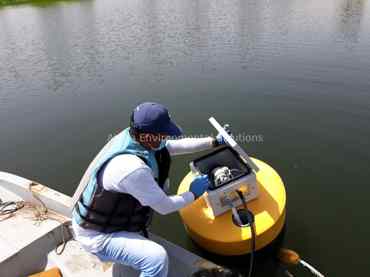
Most fish species are comfortable when dissolved oxygen stays above 5 to 6 mg/L. Serious stress begins between 2 and 4 mg/L, and below 2 mg/L death can be rapid and widespread. Under Dubai environmental guidance, healthy lakes are expected to hold surface dissolved oxygen between 5 and 15 mg/L and bottom readings above 4 mg/L, values that regular water quality monitoring is designed to protect.
Why regional community and irrigation lakes are especially exposed
Most ornamental and irrigation lakes in the region are shallow, artificial and slow-moving, the exact conditions that heat up and lose oxygen fastest. Many are topped up with treated sewage effluent, which is rich in the nutrients that drive algal growth. High evaporation concentrates those nutrients further, and lakes stocked with ornamental fish carry a biological load the water must support even as oxygen falls.
These risks are not theoretical. In December 2025, a large number of dead fish in an Abu Dhabi canal were officially linked to an algal bloom, and Dubai has recorded repeated summer fish deaths in community lakes attributed to heat and oxygen depletion. Any water body carrying visible algae, sludge or odour heading into peak summer should be treated as a candidate for the same outcome.
How to prevent summer fish kills
Prevention rests on keeping oxygen high and organic load low before the heat arrives. The most reliable safeguard is aeration, which circulates the water and adds oxygen throughout the depth of the lake, breaking down the stagnant bottom layer that causes most kills. Aeration should run continuously through summer and, ideally, around the clock during heatwaves and still nights when oxygen falls fastest, as explained in our guide to lake aeration and dissolved oxygen.
Alongside aeration, sludge removal cuts the oxygen demand sitting on the lake bed, while controlling nutrients and algae limits the blooms that trigger sudden crashes. Regular water quality testing gives early warning long before fish are affected, and sensible stocking densities stop a lake being asked to support more fish than its oxygen supply allows. Together these measures turn a fragile lake into a resilient one.
What to do if a fish kill is already happening
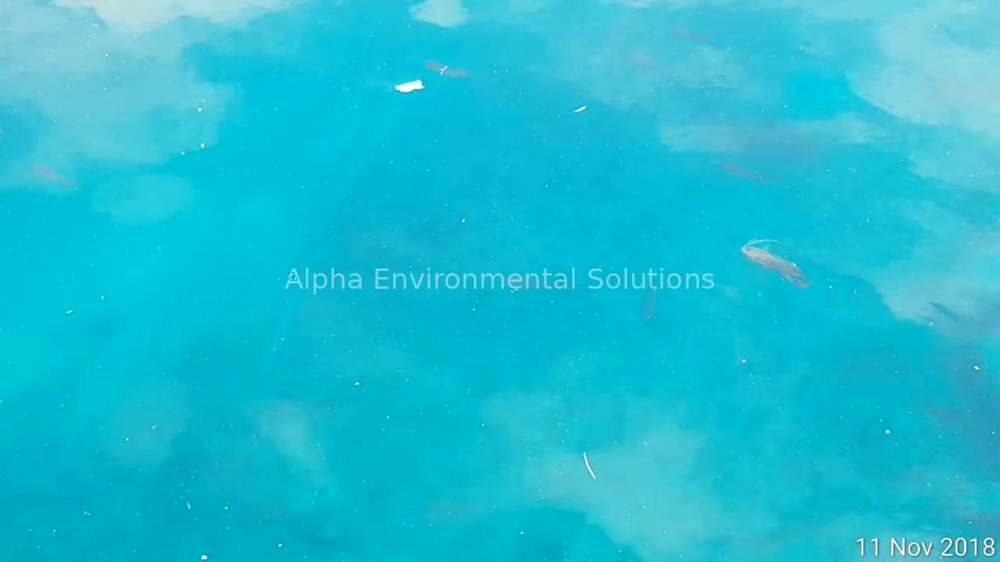
If fish are gasping at the surface, treat it as an emergency. Increase aeration immediately, or deploy portable aerators or pumps to move and oxygenate the water. Stop feeding, as uneaten food adds to the oxygen demand, and remove dead fish promptly to prevent further decay. Test dissolved oxygen and other parameters to confirm the cause, and bring in an environmental consultancy to stabilise the lake and prevent a repeat. Rapid action can save the surviving stock and protect water quality.
Frequently asked questions
Why do fish die in community lakes during summer?
Almost all summer fish deaths come down to a lack of dissolved oxygen. Warm water holds less oxygen than cool water, and high temperatures also speed up the decomposition and algal activity that consume what oxygen remains. When levels fall below roughly 2 mg/L, fish begin to suffocate, often within hours.
Can a fish kill really happen overnight?
Yes. Plants and algae produce oxygen by day but consume it at night through respiration. On a hot, still night after a cloudy day, oxygen can crash before dawn, which is why residents frequently find large numbers of dead fish first thing in the morning.
Does green water mean my lake will suffer a fish kill?
A heavy green algal bloom is a strong warning sign. While the bloom is growing it can mask low oxygen, but when it suddenly dies back the decaying algae strip oxygen from the water, a common trigger for sudden fish losses.
How does aeration prevent summer fish kills?
Aeration circulates the water and adds oxygen throughout the depth of the lake, preventing the stagnant, oxygen-starved bottom layer that forms in summer. It is the single most effective safeguard for a stocked ornamental or irrigation lake.
Is a summer fish kill a compliance concern in Dubai?
It can be. Dubai water bodies are expected to hold healthy dissolved oxygen levels (surface readings between 5 and 15 mg/L and bottom readings above 4 mg/L under local environmental guidance), so a fish kill can attract regulatory attention as well as complaints from residents.
Protect your lake before the next heatwave
Summer fish kills are predictable, and largely preventable. A lake that is aerated, kept clear of excess sludge and monitored through the hottest months rarely loses its fish. Since 2007, Alpha Environmental Solutions has helped communities, developers and facilities managers across the UAE keep their lakes healthy through summer. To assess your water body before the next heatwave, contact Alpha Environmental Solutions on +971 4 338 6660 or info@alphasolutions.ae, or visit our contact page.