
A community lake turns green when nutrients build up faster than the water can absorb them. Fertiliser washed off surrounding lawns, grass clippings, leaf litter, fish feed and settled sludge all feed algae, and the UAE’s warm water lets that algae multiply quickly. The visible result is green or cloudy water, but the real problems follow close behind: foul odours, dead fish, mosquito breeding and complaints from residents. In Dubai, a water body that fails municipal quality limits can be fined or ordered to close until it is fixed. The way back is a managed programme that combines aeration, sludge removal, nutrient control and regular water testing, matched to the size and use of the lake.
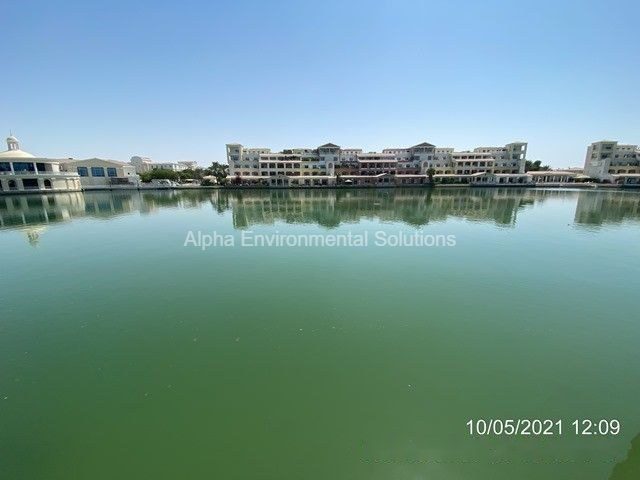
For a developer or facility manager, a lake is not just landscaping. It is a visible asset that shapes how residents, guests and buyers judge the whole community. When it goes green, that judgement turns quickly, and the cost of recovery is almost always higher than the cost of prevention.
What causes a man-made lake to turn green?
The technical term is eutrophication. It describes what happens when a water body takes in more nutrients, mainly nitrogen and phosphorus, than its ecosystem can process. In a healthy lake, nutrients are used up gradually and the water stays clear. In an overloaded lake, algae bloom across the surface, block sunlight and strip oxygen from the water as they die and decompose. Warm-weather regions see this as a seasonal problem, and in the heat of a Gulf summer an untreated lake can turn completely green within days.
The nutrient sources in a typical UAE community are easy to overlook. Irrigation runoff carries lawn fertiliser straight into the water. Grass clippings and fallen leaves rot on the bottom. Ornamental fish are often overfed, and the surplus settles as organic load. Over months and years this material builds up as a layer of nutrient-rich sludge that keeps feeding algae even after the obvious sources are cleaned up.
What are the early warning signs of a failing lake?
Water rarely turns green overnight without warning. The signals usually appear in sequence, and catching them early is the difference between a routine correction and an expensive recovery. Watch for:
- A loss of clarity: the water turns cloudy and takes on a green or brown tint.
- Surface scum or foam: algae collect along the downwind edge of the lake.
- A musty or rotten-egg odour: a serious flag that points to low oxygen and decomposition on the lakebed.
- Fish at the surface: fish gasping for air or dying in numbers means oxygen has already crashed.
By the time residents are complaining about the smell and appearance, the lake has usually been deteriorating for weeks. A monitoring routine that catches the first two signs saves the cost of dealing with the last two.
Why does the UAE climate make the problem worse?
Few environments are as demanding on an ornamental water body as the Gulf. Summer water temperatures regularly climb past 30 degrees, and warm water both speeds up algae growth and holds less dissolved oxygen. High evaporation concentrates salts and nutrients as the water level drops, so what remains becomes progressively harder to keep in balance. Rainfall is minimal, which means there is almost no natural flushing to dilute the nutrient load. Add long hours of intense sunlight and you have close to ideal conditions for algae and near-constant pressure on the systems meant to hold them back. A management approach designed for a temperate climate will not hold up here.
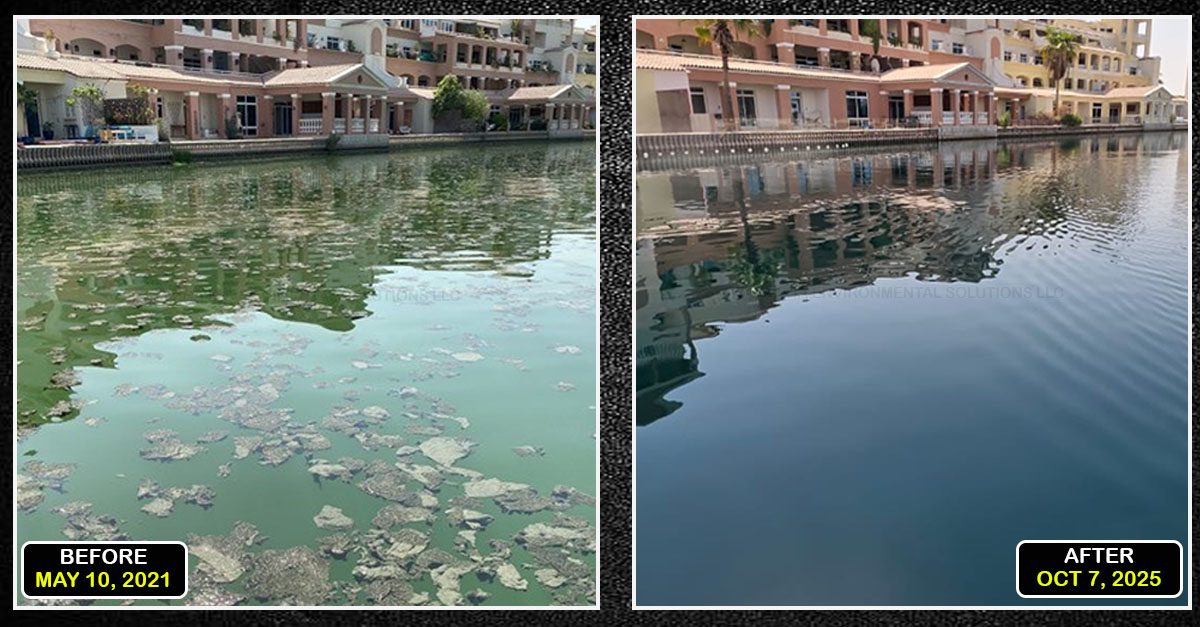
What does professional lake management actually involve?
Effective lake management is not a single product or a one-off treatment. It is an integrated programme that deals with the causes of decline as well as the symptoms. The main components work together:
- Aeration and circulation. Mechanical aerators and circulators mix the water column, raise dissolved oxygen and break up the stagnant zones where nutrients and algae concentrate.
- Sludge removal and dredging. Removing the accumulated organic layer takes away the nutrient reservoir feeding the algae. In some cases dredged areas are capped with clean sand to lock residual nutrients in place.
- Nutrient control. Phosphorus-binding treatments and flocculants such as modified clay strip nutrients from the water and settle suspended solids, improving clarity.
- Weed and bryozoan control. Invasive weeds and bryozoan colonies are removed before they spread and clog intakes or aerators.
- Water-quality monitoring. Regular testing of oxygen, pH, nutrients and clarity turns management from guesswork into a measured programme, and provides the records authorities may ask for.
No single one of these fixes a lake on its own. Aeration without sludge removal only masks the problem, and dredging without ongoing nutrient control simply resets the clock.
What does it cost to ignore a lake?
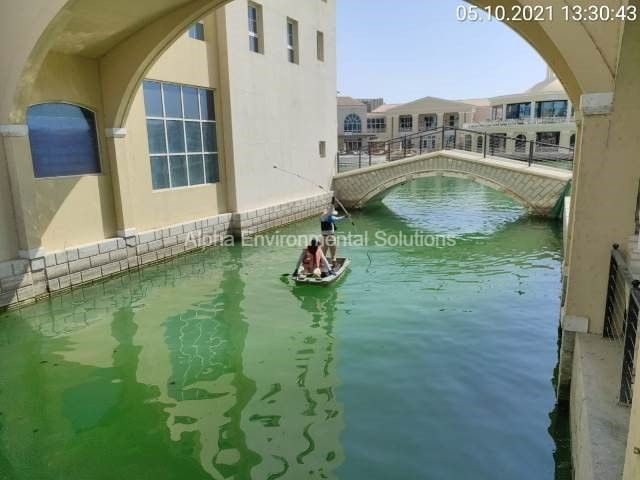
The temptation is to defer maintenance until a lake visibly fails. That is usually the most expensive path, because a neglected water body carries several risks that compound each other.
Regulatory risk comes first. Dubai Municipality monitors lakes and water features for water quality and public-health pests, and a property that breaches the limits can be fined and, in serious cases, ordered to close the water body until it is remediated. Health risk follows, because stagnant nutrient-rich water is a breeding ground for mosquitoes and the diseases they carry. Then there is reputational and financial risk: a green, smelly lake at the entrance to a development undermines property values, deters buyers and tenants, and generates a steady stream of complaints. Emergency recovery of a collapsed lake almost always costs more than the routine programme that would have prevented it.
How often should a community lake be serviced?
The honest answer is that it depends on the size of the lake, how it is used and what feeds into it, but every functioning water body needs a planned schedule rather than reactive call-outs. Most managed lakes in the region benefit from continuous aeration, weekly or fortnightly water-quality checks, routine removal of surface debris and weed, and periodic sludge assessment to decide when dredging is due. The exact cadence should be set after a site survey, not copied from another property. What matters is that the intervals are planned in advance, because the cost and difficulty of correction rise sharply once a lake has been left to decline.
Frequently asked questions
Why is my community lake green even though it looked fine last month?
Warm weather is usually the trigger. Nutrients that built up quietly over months feed a rapid algae bloom as soon as water temperatures rise, so a lake can shift from clear to green within days. The underlying cause is the nutrient load, not the heat alone.
Is a green lake dangerous to residents?
It can be. Some algae produce toxins, and stagnant nutrient-rich water breeds mosquitoes. Beyond that, the odour and appearance affect quality of life and can signal that oxygen levels are low enough to kill fish. It should be treated as a problem to fix, not to tolerate.
Can we just add chemicals to clear it up?
Chemical treatments can knock back a bloom, but on their own they are a short-term fix. If the sludge and nutrient sources feeding the algae are left in place, the green water returns. Lasting results come from combining treatment with aeration, sludge management and source control.
Will Dubai Municipality really close a lake?
If a water body repeatedly fails quality thresholds and poses a public-health risk, enforcement action including fines and closure is possible. Keeping records of regular testing and maintenance is the best protection.
How quickly can a failing lake be recovered?
Minor cases can improve within days once aeration and treatment begin. A lake with heavy sludge and an established bloom may take weeks and require dredging. Early intervention is always faster and cheaper.
Alpha Environmental Solutions has managed lakes and water features across the UAE and wider Middle East since 2007. If your community lake is showing early warning signs, or you want a preventive programme in place before summer, our team can carry out a site survey and recommend a plan matched to your water body. Call +971 4 338 6660 or email info@alphasolutions.ae.