
Sludge is the soft, dark layer of organic mud that settles on the bottom of every ornamental lake over time. It forms from dead algae, leaf litter, grass clippings, fish waste, dust and fine soil washed in from the banks. In the UAE’s warm climate this material breaks down slowly and keeps building, so a lake that looked healthy a few years ago can quietly lose much of its depth to a black, oxygen-starved layer. Left alone, sludge releases nutrients that feed algae blooms, produces foul rotten-egg odours, puts fish at risk and shrinks the water body. The only lasting fix is physical removal by dredging, ideally before the layer becomes thick enough to threaten water quality, amenity value and the reputation of the community it sits in.
What is lake sludge and why does it build up?
Sludge, sometimes called silt or benthic muck, is the accumulated organic sediment that collects on a lake bed. Every ornamental lake receives a constant supply of material: algae and aquatic plants die and sink, leaves and clippings blow in, irrigation runoff carries soil and fertiliser, and birds and fish add waste. In cooler climates bacteria decompose much of this before it settles for good. In the Gulf, high temperatures might suggest faster breakdown, but the deeper water quickly runs out of oxygen and decomposition there almost stops. The result is a layer that thickens year after year, often by several centimetres annually in a busy community lake. Man-made lakes with hard liners and little natural flushing are especially prone, because nothing carries the sediment away. This steady input is why sludge is a maintenance issue, not a one-off event.
Why is sludge build-up a problem for community lakes?
A thick sludge layer is not just unsightly mud, it actively degrades the whole water body. As it decomposes it consumes dissolved oxygen, and the low-oxygen conditions at the bottom can trigger sudden fish kills, particularly on still, hot summer nights. The same anaerobic breakdown produces hydrogen sulphide, the source of the rotten-egg smell that draws complaints from residents and visitors. Just as important, sludge is a nutrient store: it holds years of accumulated phosphorus and nitrogen and releases them back into the water, a process called internal loading. This feeds repeated algae blooms and weed growth, so a lake can turn green again within weeks of being treated only at the surface. Sludge also reduces depth and volume, which warms the water further and shrinks habitat. For a residential or hotel development, that means higher maintenance costs, unhappy residents and a falling asset value.
How do you know how much sludge your lake holds?
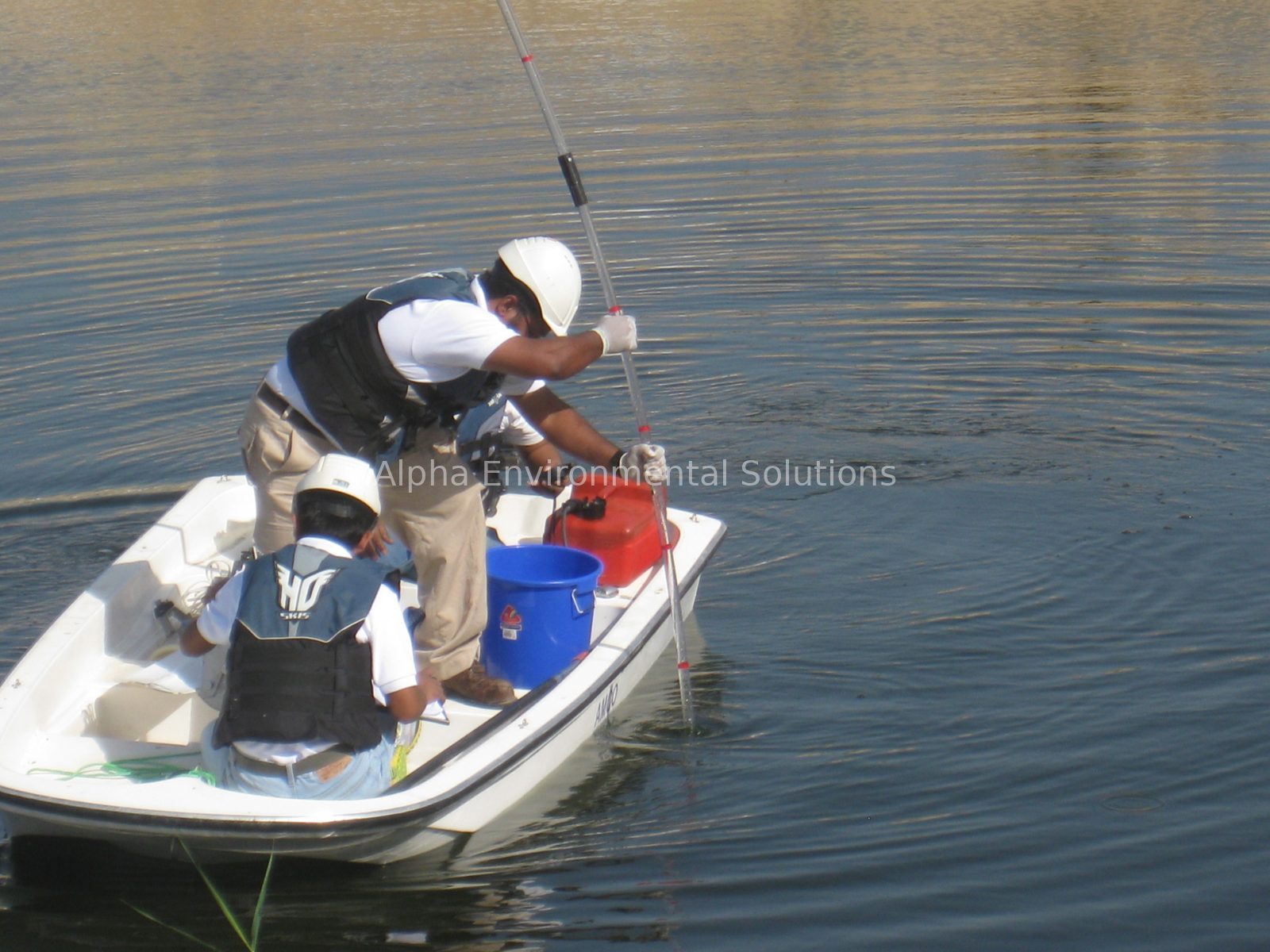
You cannot manage what you have not measured, and judging sludge from the bank is unreliable. The standard method is a sludge survey: a technician works across the lake in a small boat, lowering a graduated probe at fixed points on a grid and recording the depth of soft sediment above the firm base below. Plotting these readings produces a contour map of the sludge, showing where it is thickest, usually near inflows, fountains and sheltered corners, and giving a total volume in cubic metres. That figure drives everything that follows: whether removal is needed now, how much material must be handled and disposed of, and what the work will cost. A proper survey also samples the sludge for contaminants, which decides the legal disposal route. Skipping this step almost always leads to under-scoped work and unwelcome surprises once the equipment arrives.
How is sludge removed from an ornamental lake?
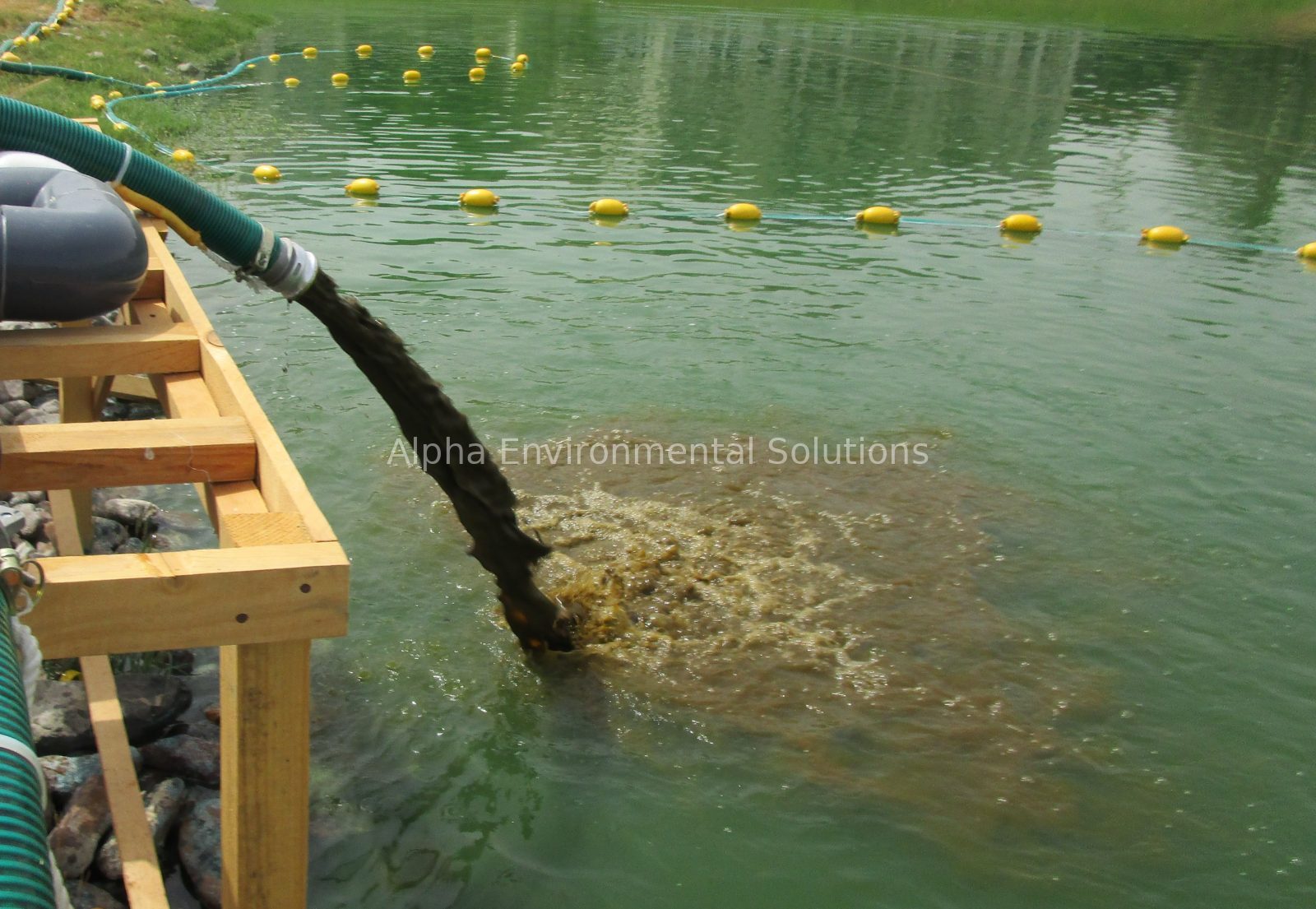
For anything more than a shallow nuisance layer, hydraulic dredging is the preferred method, because it lifts sludge out without draining the lake or tearing up the surrounding landscape. A floating dredger sits on the water and pumps a slurry of sludge and water through a pipeline to a treatment area on the bank. Because the lake stays full, fish and everyday amenity use can often carry on alongside the work. A typical programme runs as follows:
- Survey the lake to map sludge depth and calculate the volume to be removed.
- Sample the sediment and confirm the approved disposal route with the relevant authority.
- Position a floating hydraulic dredger and run a discharge pipeline to a bank-side dewatering area.
- Pump the sludge slurry ashore, adding a flocculant so the solids bind together and separate from the water.
- Dewater the solids inside geotextile bags while the clarified water drains back to the lake or to drainage.
- Cart the dried sludge off site to a licensed facility, then reinstate the banks and any disturbed planting.
Very small or shallow water features may instead be pumped down and cleaned mechanically, but for most community lakes the floating dredger causes the least disruption.
What happens to the sludge after it is removed?
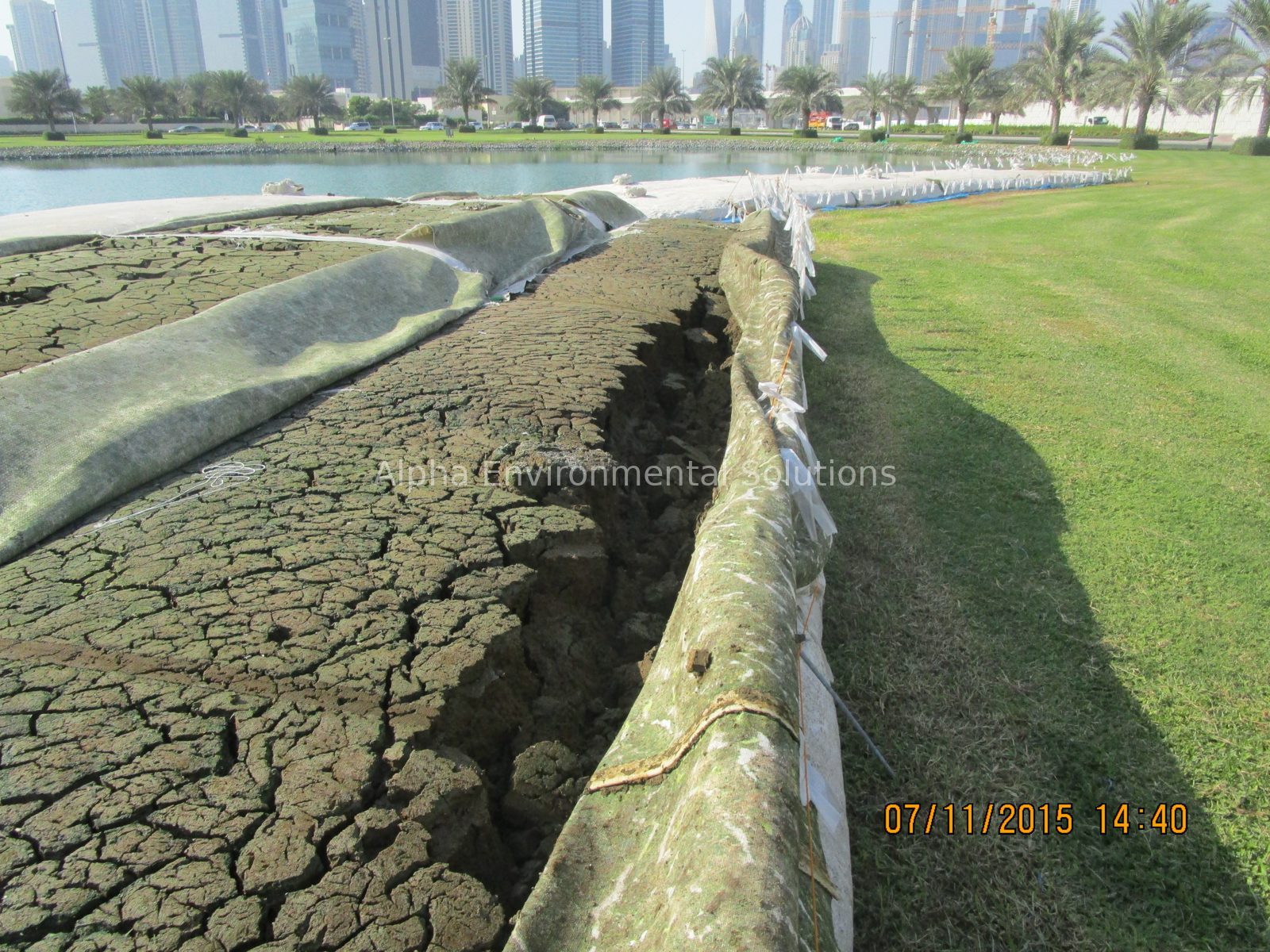
Getting sludge out of the water is only half the job, because the material then has to be dried and disposed of legally. Fresh dredged sludge is mostly water, so loading it straight into skips is impractical. The common answer is dewatering inside large geotextile bags: the slurry is pumped in, the fine weave holds the solids while clear water filters out and drains away, and over days to weeks the contents shrink to a firm cake. This cuts the volume sharply and makes the material far safer to handle. Where the sludge is clean, the dried cake can sometimes be reused as fill or landscaping soil. Where testing shows contaminants, it must go to a licensed disposal site with the correct paperwork. UAE municipalities take waste handling seriously, and disposing of dredged material incorrectly can bring fines and reputational damage, so this stage is best left to a contractor who manages the documentation.
How can you slow sludge from returning?
Dredging resets the lake, but sludge starts to gather again from the day the work finishes, so a maintenance strategy protects the investment. The single most effective measure is aeration: keeping the water and the lake bed oxygenated helps bacteria break down organic matter before it settles, and it prevents the anaerobic conditions that release stored nutrients. Controlling the inputs matters just as much. Reducing fertiliser use on surrounding lawns, screening irrigation runoff, clearing fallen leaves and managing weeds all slow the rate at which fresh organic material reaches the bed. Regular water-quality monitoring and a periodic sludge survey, every two to three years, catch build-up early, when a light maintenance dredge costs far less than a full desilting. A short environmental assessment can set the right monitoring interval for your site. The lakes that stay clear and odour-free are almost always the ones on a planned programme rather than those that wait for a crisis.
Frequently asked questions
How quickly does sludge build up in a UAE lake?
It varies with the lake’s design and surroundings, but a busy community lake commonly gains a few centimetres of sludge each year. Lined lakes with heavy planting, fountains and constant irrigation runoff build up fastest. A survey every two to three years is enough to track the trend and plan ahead.
Can sludge be removed without draining the lake?
Yes. Hydraulic dredging works from a floating platform and pumps sludge out while the lake stays full, so there is no need to drain it, relocate fish or close the amenity for long. Draining is usually reserved for very small or shallow features.
Does removing sludge get rid of algae problems?
It removes a major cause. Sludge stores years of nutrients and releases them back into the water, feeding repeated blooms. Taking it out lowers that internal nutrient load, though lasting control also needs aeration and management of the nutrients still entering the lake.
What does a bad smell from the lake mean?
A rotten-egg odour is hydrogen sulphide, produced when thick sludge decomposes without oxygen at the lake bed. It is a reliable sign that the sediment layer has become a problem and that oxygen levels are low, which also puts fish at risk.
How disruptive is a sludge removal project?
Less than most people expect. Because the dredging happens on the water and discharges to a compact bank-side area, day-to-day use of the surrounding space usually carries on. The main footprint is the dewatering area, which is reinstated once the work is complete.
If your lake is losing depth, turning green or giving off an odour, do not wait for a fish kill or a stream of resident complaints to force your hand. Alpha Environmental Solutions has surveyed and desilted lakes across the UAE since 2007. Call +971 4 338 6660, email info@alphasolutions.ae, or visit our contact page to arrange a sludge survey.