
Most foam on a lake is natural and harmless, but scum is a different matter, and the two are easily confused. Foam is a layer of bubbles that collapses when disturbed. Scum is a floating film or mat, often of algae, oil or decaying matter, and it can signal a water body under stress. For community lakes across the UAE and the wider Middle East, the practical question is simple: does it smell, does it return, and does it have a visible source? If the answer to any of these is yes, the lake needs a proper inspection rather than a quick clean.
Why do community lakes produce foam?
Foam forms when something lowers the surface tension of the water and wind or moving water traps air. In most lakes that something is dissolved organic matter. Environmental agencies describe natural foam as the product of decaying algae, plants and organic compounds leached from soil, and note that it is usually not an indicator of pollution (see the lake foam guidance published by the Maine Department of Environmental Protection). Natural foam is typically clear to white, smells earthy or fishy, collects on the downwind shore and often disappears by midday.
Middle East lakes add their own triggers. Summer water temperatures push algae through fast growth and die-off cycles, dust and plant debris settle on the surface, and fountains or aerators agitate water that already carries dissolved organics. Foam around a spray nozzle or cascade is therefore common and usually not a concern on its own. The risk lies in what the foam is sitting on top of.
How is scum different from foam?
Scum is made of material rather than air. Three types turn up most often on managed lakes, and each points to a different cause.
Algal scum
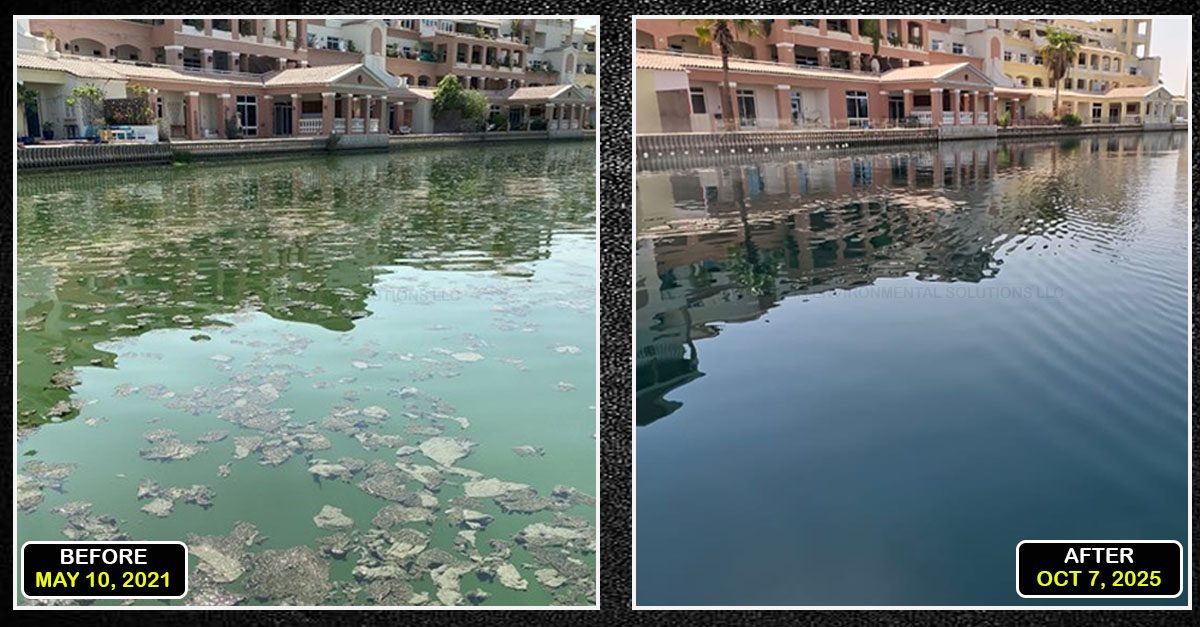
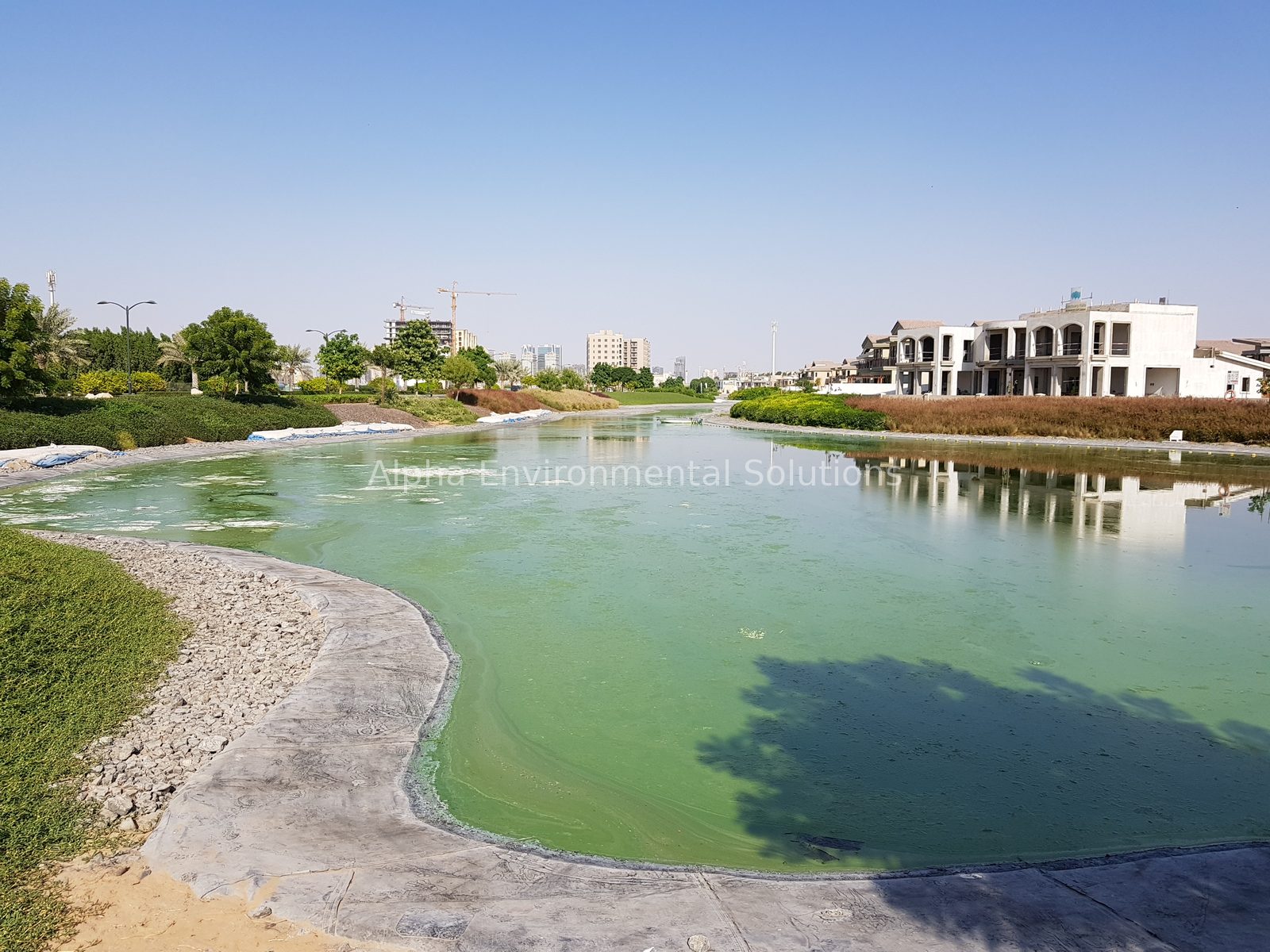
Dense green or blue-green layers that look like spilt paint are usually cyanobacteria or concentrated algae. They collect on the downwind edge and smell musty or sweet. Some cyanobacteria produce toxins, so residents, children and pets should be kept away until the water is assessed. Our posts on toxic blue-green algae and why community lakes turn green explain the causes in detail, while filamentous algae mats behave differently, forming stringy floating masses.
Oily films
A rainbow sheen can be natural, produced by bacteria and iron, or it can be petroleum. A simple test is to poke it: natural films break into angular plates, while hydrocarbon films swirl and re-form. Possible sources include leaking pumps, vehicle runoff and spills near the shoreline. Heavy rain washes road contaminants into lakes, a pattern described in our article on stormwater runoff and community lakes.
Detergent and wastewater foam
Foam that is thick, persistent, perfumed and concentrated near an inlet or outfall deserves attention. Possible causes include cross-connections, washing activity near drains and irrigation overspray carrying cleaning products. Because such foam is localised, the source is usually traceable once someone looks.
How can facilities teams check a lake in five steps?
A structured field check takes ten minutes and gives a managing contractor far better information than a phone call saying the lake looks odd. These are the steps we recommend before deciding on treatment:
- Record location and time. Note where the material gathers, the wind direction and whether it clears by midday.
- Smell it. Earthy or fishy points to natural organics; musty or sweet suggests algae; perfume points to detergent; fuel or sewage needs urgent follow-up.
- Shake a jar of the water. Natural foam fades quickly, while detergent foam multiplies and feels slippery.
- Inspect colour and texture. Paint-like green or blue-green layers, stringy mats, rainbow films and brown silty foam each have different causes.
- Photograph and log it. Keep dated photographs, check whether fountains and aerators are running, and request dissolved oxygen, pH and nutrient readings if the problem repeats.
Why should community managers take scum seriously?
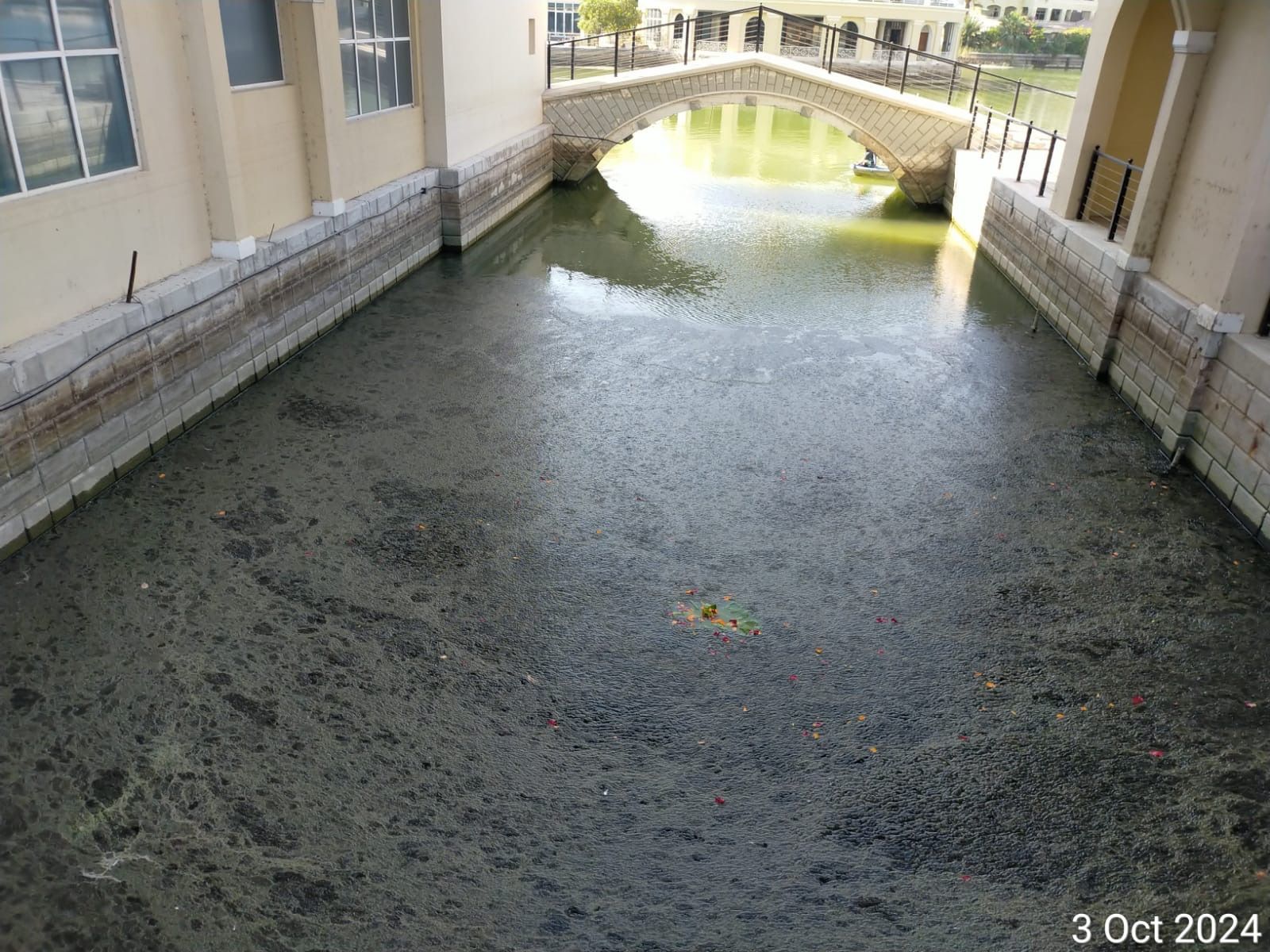
Floating material is rarely the whole story. As algae and organic matter die, bacteria consume dissolved oxygen, the water darkens and odours develop. The oxygen balance of a lake is covered in our article on lake aeration and dissolved oxygen, and the same mechanism links surface scum to sludge build-up on the bed. Residents also notice quickly: a scummy lake photographed and shared by neighbours becomes a reputation problem long before it becomes a technical one.
There is a compliance angle as well. Closed lagoons and ornamental lakes in Dubai are expected to meet water-quality criteria, and recurring scum, odour or discolouration makes monitoring results harder to defend. Our guide to DECCA water quality monitoring sets out what regulators check. Because management responsibility sits with the community, delay carries the risk, not the contractor.
What should be done about scum and foam?
Treatment follows the cause. Where algae is the source, the answer combines mechanical removal of floating mats, correction of nutrient inputs, improved circulation and, where appropriate, biological or chemical bloom control applied by trained staff. Our lake management programmes start with this diagnosis, and aeration systems are often the long-term fix where stagnation drives the problem.
Where decaying organic matter has settled on the bed, scum will keep returning until the source is dealt with, which is when sludge removal becomes necessary. If the source is a suspected pollutant, water sampling and an assessment by an environmental consultancy are the right next step, not another surface skim.
Prevention is cheaper than cure. Regular inspection rounds, a logged fountain and aerator schedule, and seasonal water testing allow small changes to be caught early. Communities that wait for residents to complain usually find the lake is already well into a decline.
Act before the lake makes the decision for you
Foam alone rarely means trouble, but scum, sheen and persistent odour do. Check the lake, record what you find and bring in a specialist while the problem is small. Alpha Environmental Solutions has managed lakes and lagoons across the UAE and the Middle East since 2007. Call +971 4 338 6660, email info@alphasolutions.ae or use the contact page to arrange an inspection.
Frequently asked questions
Is foam on a lake always a sign of pollution?
No. Most lake foam is natural. Organic compounds released by decaying algae and plants lower the surface tension of the water, and wind then traps air into bubbles. Foam that is localised, multiplies when shaken, feels slippery or smells perfumed is more likely to involve detergent or wastewater and should be investigated.
What is the difference between foam and algal scum?
Foam is made of bubbles and usually fades or collapses when disturbed. Algal scum is a layer or mat of cells that floats, often looks like green or blue-green paint, and smells earthy or musty. Scum from cyanobacteria can be toxic, so it should not be touched or treated as ordinary debris.
Why does my community lake have an oily film?
A thin rainbow-coloured film can come from leaking pumps or machinery, runoff from roads and car parks, or fuel spilt near the water. Some films are natural and break apart when poked, while petroleum films stay as a continuous sheet. Persistent films need a source check and sampling.
Can scum on a lake affect water quality readings?
Yes. Large volumes of floating algae and organic matter reduce light below the surface, then decay and consume dissolved oxygen. This can push oxygen down, raise odour and turbidity, and make compliance monitoring results harder to defend.
Who should remove scum and foam from a community lake?
Surface skimming and bloom control should be carried out by an experienced lake management contractor, with the source investigated at the same time. Removal alone treats the symptom. If the cause is nutrients, poor circulation or a pollution source, the problem returns.