
Blue-green algae, known to scientists as cyanobacteria, are among the most serious water-quality hazards facing community and ornamental lakes across the Middle East during the summer months. When intense heat, strong sunlight and excess nutrients combine, cyanobacteria can multiply rapidly into a dense bloom that turns the water green and, in some cases, releases toxins that harm people, pets and fish. The difficult part for any property or facilities manager is that a harmful bloom can look almost identical to harmless green algae, so safety cannot be judged by appearance alone. This guide explains what blue-green algae are, why lakes in the region bloom in the hottest months, how to recognise the warning signs, and what practical steps reduce the risk to residents and wildlife.
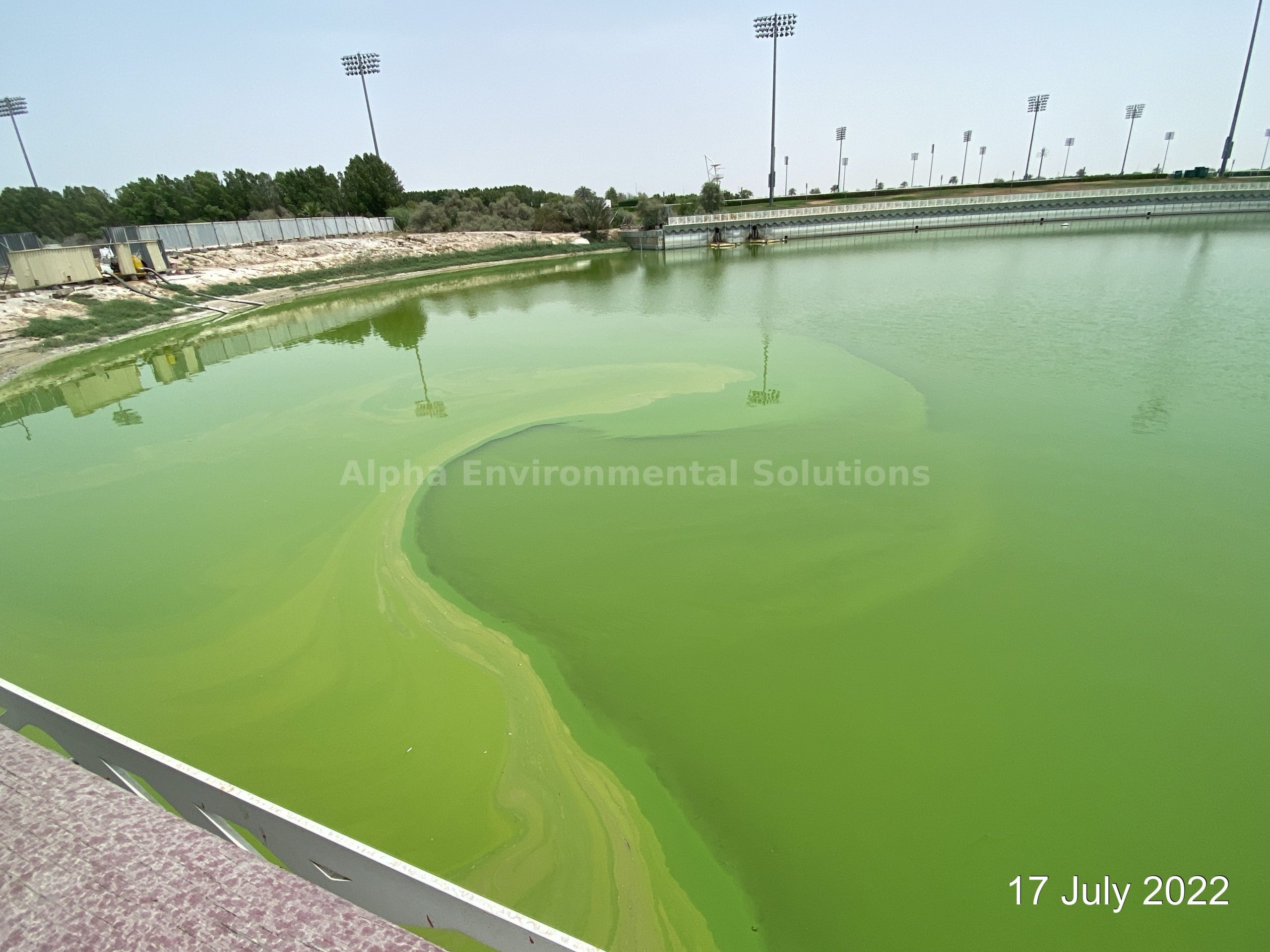
What is blue-green algae (cyanobacteria)?
Despite the common name, blue-green algae are not true algae at all. They are cyanobacteria, a group of photosynthetic bacteria that occur naturally in fresh and brackish water. In small numbers they are a normal part of a lake ecosystem, and problems begin only when conditions let them dominate and form a bloom. Some (though not all) cyanobacteria produce cyanotoxins, including microcystins, which affect the liver, and cylindrospermopsin, which can damage several organs. The World Health Organization, in its guidance on toxic cyanobacteria in water, treats these blooms as a recognised public-health concern rather than a cosmetic nuisance.
A cyanobacteria bloom often looks like green paint, pea soup or a film of scum on the surface. Colours range from bright green to blue-green, brown or even reddish. Because the same appearance can be produced by harmless green algae, and because toxin production varies from day to day, the safest working assumption is that any thick green scum could be harmful until testing shows otherwise.
Why do Middle East community lakes bloom in summer?
Three ingredients drive almost every bloom: warmth, light and nutrients. Summer in the region supplies the first two in abundance, with high temperatures and long hours of strong sunlight warming shallow ornamental lakes for weeks on end. The third ingredient, nutrients (mainly nitrogen and phosphorus), usually comes from the surrounding development: fertiliser washed off landscaped areas, grass clippings and leaf litter, overfeeding of ornamental fish, and, in some schemes, nutrient-rich water used for top-up or irrigation.
Poorly mixed water makes the problem worse. When a lake stratifies and the surface stops mixing with deeper layers, the warm, nutrient-rich film at the top becomes an ideal nursery for cyanobacteria. The same stagnant, oxygen-poor conditions that feed a bloom also set the stage for related problems we have covered before, from lakes that turn green to summer fish kills caused by collapsing oxygen levels.
Why blue-green algae is a risk you cannot ignore
The reason cyanobacteria deserve more caution than ordinary pond weed is the toxins some strains release. Microcystins can affect the liver, while cylindrospermopsin has been linked to damage across the liver, kidneys and lungs. Even without swallowing the water, direct skin contact with a toxic bloom can cause rashes, blistering and irritation of the eyes and nose. Adults rarely wade into an ornamental lake, but children and animals do not always read the warning signs.
Pets, dogs in particular, are the most frequent serious casualties. A dog that swims in or drinks from a bloom, then licks its coat, can ingest a dangerous dose within minutes, and poisoning can be fatal. Wildlife and stocked fish are also at risk, both from the toxins and from the oxygen crash that follows when a heavy bloom dies and decays. For a residential community or a commercial development, a visible bloom brings odour complaints, reputational damage and the prospect of closing off a waterside amenity during the busiest season.
Warning signs to watch for
Facilities teams and residents can act as an early-warning system. Watch for the following, and keep people and pets away from the water until it has been assessed:
- Water that looks like pea soup, spilled green or blue-green paint, or carries a film of scum
- A sudden green, blue-green, brown or reddish discolouration, often worst along the downwind shore
- A musty, earthy or swampy odour rising from the lake
- Dead or distressed fish, or birds that suddenly avoid a stretch of water
- Green flecks, foam or a paint-like sheen collecting at the edges and around inlets
Remember that these signs point to a possible hazard, not a confirmed one. You cannot tell a toxic bloom from a harmless one by eye, which is why the next step matters.
How can you tell if a bloom is toxic?

Confirming toxicity needs measurement, not guesswork. In practice this means sampling the water and, where warranted, sending it for cyanobacteria cell counts or toxin analysis. The World Health Organization sets tiered guidance for recreational waters: roughly 20,000 cyanobacterial cells per millilitre (about 10 micrograms per litre of chlorophyll-a where cyanobacteria dominate) marks a relatively low probability of health effects, while around 100,000 cells per millilitre (about 50 micrograms per litre of chlorophyll-a) signals a moderate probability and calls for firmer control of access.
On the ground, our teams pair visual assessment with instrument readings taken from a boat, using a calibrated multimeter for temperature, dissolved oxygen and pH, alongside water samples. This is the same disciplined method we describe in our guide to lake water quality monitoring, and it lets a community make decisions on evidence rather than on appearance. Where a bloom is suspected, treating the water as potentially harmful until results return is the responsible course.
What the guidance means for lakes in the region
Regulators in the region, including Dubai Municipality and the Dubai Environment and Climate Change Authority (DECCA), expect man-made and community water bodies to be kept within defined water-quality limits, with dissolved oxygen maintained at healthy levels and nutrients controlled. A cyanobacteria bloom is a clear signal that those conditions have slipped. For closed lagoons and ornamental lakes subject to environmental clearance, a visible bloom is not only an amenity issue: it can bear on compliance and on the periodic inspections these water bodies must pass. Acting early, before a bloom becomes established, is far cheaper and less disruptive than managing a full incident in peak summer.
How to manage and prevent toxic blue-green algae
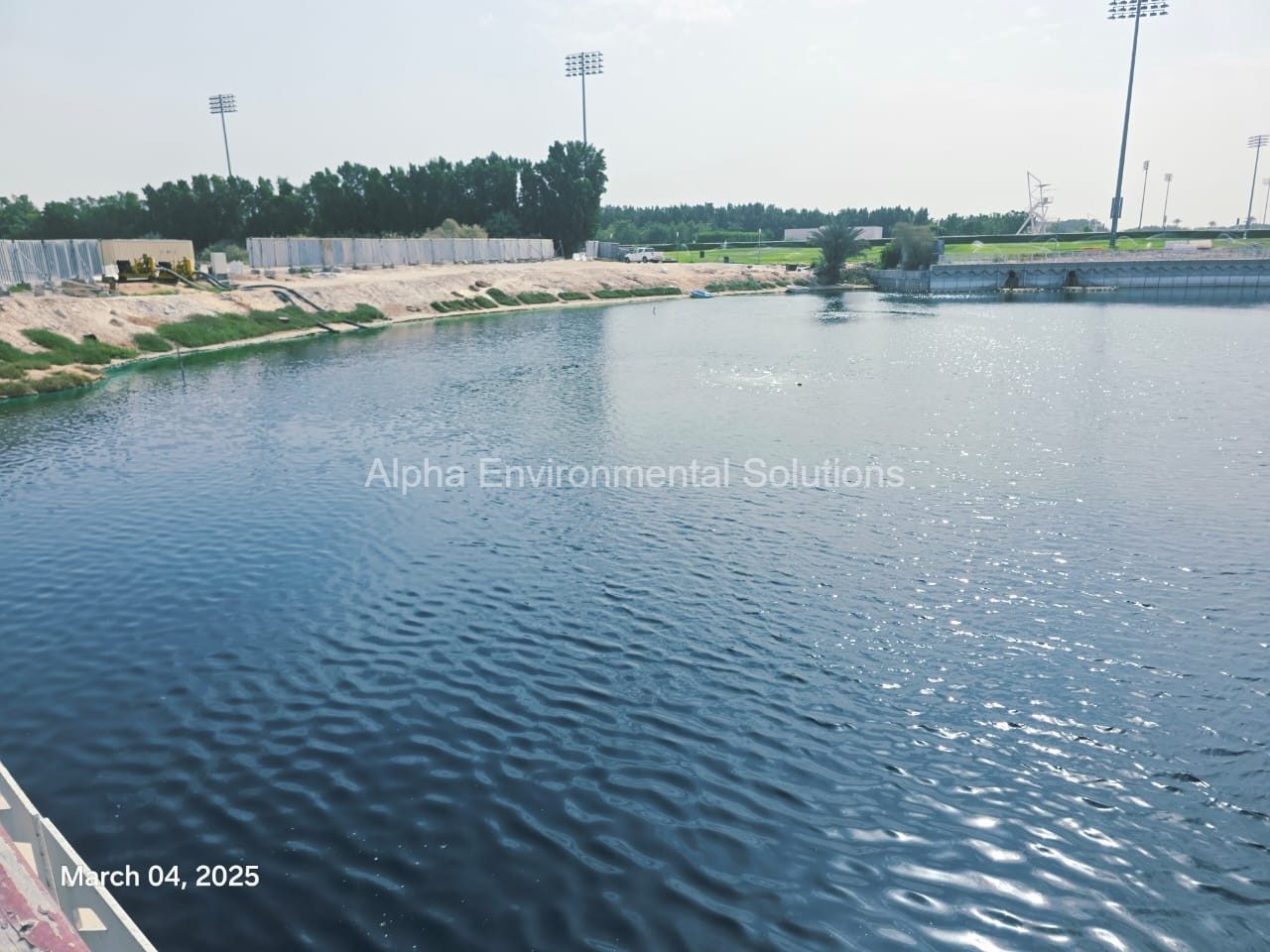
There is no single quick fix for cyanobacteria, but a lake can be brought back and kept stable with a combined programme. The priority is to remove the fuel and the stagnation that let blooms take hold. Cutting nutrient inputs (tighter control of fertiliser, fish feeding and organic debris) starves the bloom over time, while removing accumulated oxygen-consuming sludge from the bed lowers the internal nutrient load a lake recycles each summer.
Alongside nutrient control, keeping the water moving is one of the most effective defences. Well-designed aeration and circulation systems raise dissolved oxygen, break down the stratification cyanobacteria exploit, and shift conditions in favour of healthier organisms, as we explain in our guide to lake aeration and dissolved oxygen. Depending on the site, an effective programme may also include targeted, approved treatment, routine monitoring, and management of aquatic weeds and shoreline vegetation. Our full range of lake management services, from lake weed control to environmental consultancy, is built around this preventive approach.
Frequently asked questions
Is all green water in a lake dangerous?
No. Much green water is caused by harmless algae. The problem is that a toxic cyanobacteria bloom can look exactly the same, so any thick green scum should be treated as a possible hazard and assessed before people or pets use the water.
Can blue-green algae harm my dog?
Yes. Dogs are especially vulnerable because they swim in, drink from and lick blooms off their coats. Ingesting cyanotoxins can cause rapid, sometimes fatal illness, so keep pets away from any lake showing scum or unusual discolouration.
What should residents do if they see a bloom?
Keep children and pets away from the water, avoid contact, do not let animals drink it, and report it to the facilities manager or lake maintenance provider promptly so the water can be tested and managed.
How quickly can a bloom appear?
Under hot, still, nutrient-rich conditions a bloom can develop within days, which is why regular monitoring through the summer is far more reliable than waiting for a visible problem.
Can a lake be treated to prevent blue-green algae?
Yes. A combination of nutrient reduction, sludge removal, aeration and routine monitoring can greatly reduce the frequency and severity of blooms, and keep an ornamental lake safe and attractive through the hottest months.
Protect your lake before the next bloom
Blue-green algae is a summer risk that rewards early action and punishes delay. If your community or facility relies on an ornamental lake or lagoon, the time to assess it is before a bloom takes hold, not after residents start asking questions. Alpha Environmental Solutions has managed lakes and lagoons across the UAE and the wider Middle East since 2007, combining water-quality monitoring, aeration, sludge removal and nutrient control into practical programmes that keep water bodies healthy. To arrange an assessment, call +971 4 338 6660, email info@alphasolutions.ae, or visit our contact page.
A very informative guide, especially the explanation of how cyanobacteria blooms develop in the Middle East and why they can be dangerous for people, pets, and aquatic life. The practical prevention and monitoring tips are also very useful.
Thanks, dliyatul. We are glad that you found the guide informative and useful