
A community lake maintenance budget in Dubai should cover water-quality monitoring, aeration, algae and weed control, sludge management, shoreline inspection and a reserve for equipment replacement, all tied to a written scope of work with measurable targets. Most lake problems that reach owners as emergency invoices were visible months earlier as under-funded line items. Many communities finalise next year’s service charge budget in the final quarter, which makes this the right moment to test whether the lake line reflects the real condition of the water body. This article sets out what to include, how Dubai’s jointly owned property law frames the budget, and where underspending costs more than it saves.
What should a community lake maintenance budget cover?
A lake is not a landscape feature that can be funded like a lawn. It is a small, closed ecosystem with its own chemistry, and it fails in predictable ways when any one function is left unfunded. A defensible budget names each function separately so that owners, auditors and contractors can see what is being paid for. Alpha Environmental Solutions has managed UAE lakes since 2007, and the budgets that hold up best usually contain the following lines.
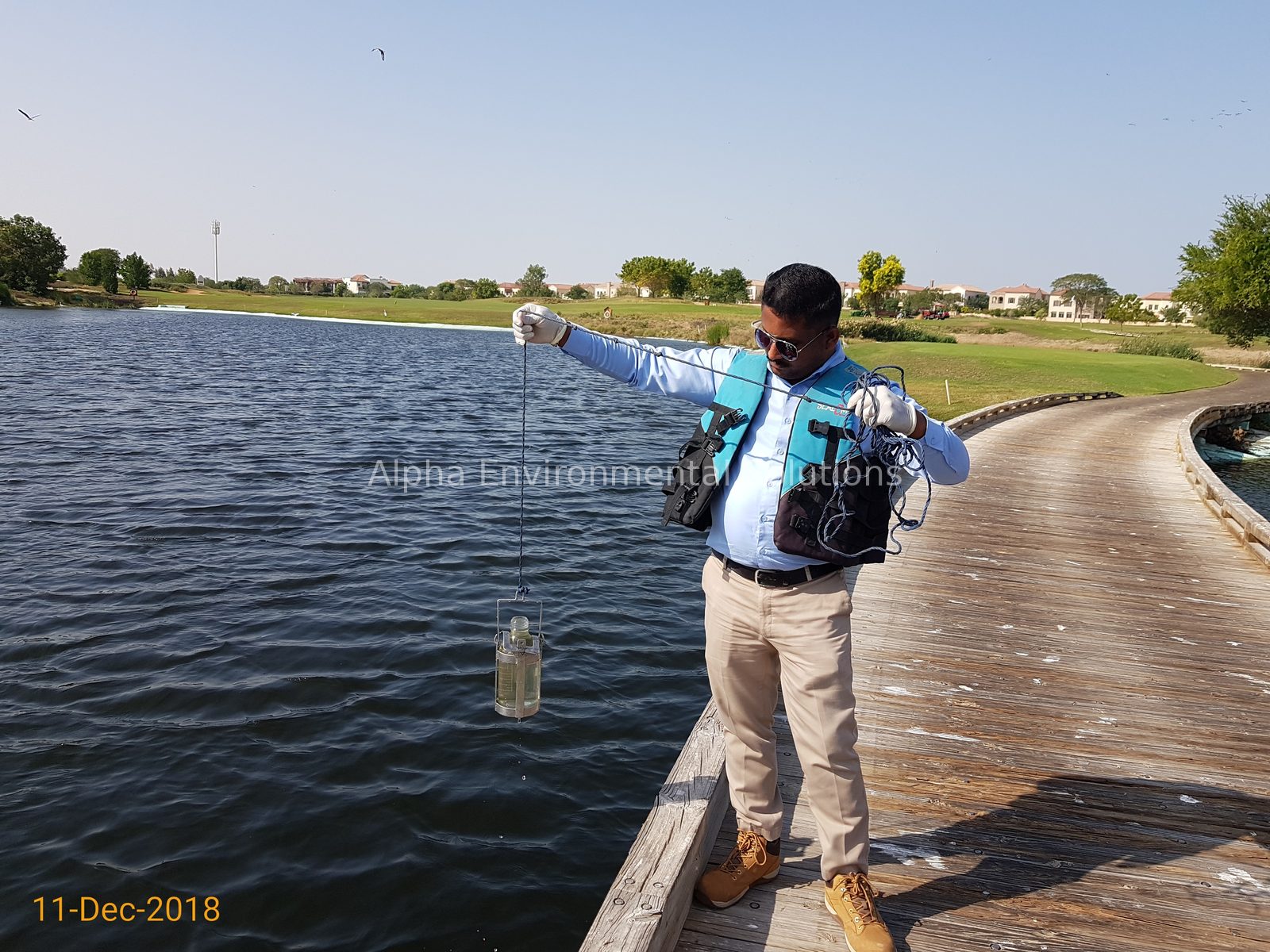
- Water-quality monitoring: scheduled sampling for dissolved oxygen, pH, turbidity and nutrients (plus salinity where the lake feeds irrigation), with a written report each visit.
- Aeration and circulation: electricity, servicing of compressors, diffusers and fountains, and a stock of spare parts.
- Algae, weed and bryozoans control: routine manual and mechanical removal, plus treatment where it is permitted.
- Sludge management: periodic depth surveys and a funded removal plan, rather than an emergency call-out.
- Shoreline and embankment inspection: checks for erosion, displaced stone and blocked inlets or outlets.
- Edge pest control: midge and mosquito management around the water margin.
- Emergency response allowance: a call-out provision for fish kills, foam, odour or sudden algae blooms.
- Reserve contribution: a share towards replacing aerators, pumps and other equipment at the end of their service life.
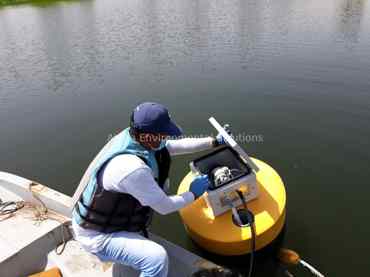
The first three lines are usually where the largest gap appears between the budget and the lake’s actual needs. Our lake management work often starts with a baseline survey precisely because a budget written without one is a guess, and a guess tends to favour the lowest number.
Why does the service charge budget matter for a lake?
Under Dubai Law No. 6 of 2019 on jointly owned real property, owners pay annual service charges for the management of common parts (Article 25). The management entity must obtain RERA approval before charging, and budgets are approved by a certified audit firm recognised by RERA (Article 27). Article 30 also provides for a cash reserve, held separately, to cover emergency expenses or replace equipment. A community lake is a common part with both running costs and replacement costs, so it belongs in the operating budget and in the reserve discussion.
The practical risk is a thin lake line. When the approved figure is too low, the shortfall does not disappear. It returns as a reserve withdrawal, a deferred repair or a rushed contract awarded after residents complain. We are not lawyers, so owners associations and management companies should confirm the treatment of specific items with their legal adviser and RERA.
What does underspending on a lake actually cost?
The cost of underspending is rarely visible in the year it happens. Sludge accumulates quietly on the bed, consumes oxygen as it decomposes and releases nutrients that feed algae, which is the sequence described in our guide to sludge build-up in ornamental lakes. Once dissolved oxygen drops during a hot spell, the consequences arrive together: fish deaths, rotten-egg odour and green water. The cycle behind that colour change is explained in our post on why UAE community lakes turn green.
Reactive work is also more expensive than routine work. Removing a season’s worth of accumulated sludge or a full-surface algae mat needs more crew, more equipment and sometimes temporary dewatering, and it has to be done on the water body’s schedule rather than the community’s. Where a lagoon operates under Environmental Clearance conditions, missed monitoring can also create a compliance question, which our article on lake water quality monitoring and what DECCA checks covers in detail. For residents, the visible outcome is a smelly, green lake in the middle of a premium community, and that reputational cost does not appear on any budget sheet.
How should the lake scope of work be written?
Set measurable targets, not activities
A scope that says “maintain the lake” cannot be audited. A useful scope states outcomes: a minimum dissolved oxygen level at defined depths, a maximum share of the surface covered by algae, a water clarity reading, a response time for call-outs and a reporting schedule. The lake aeration guide explains why dissolved oxygen is the single most useful number to put in a contract, because it moves before the visible symptoms do.
Profile the budget across the year
Lake workload is not flat. Summer heat drives oxygen loss and algae growth, autumn cooling can trigger turnover, heavy rain brings runoff and recycled-water top-ups add nutrients. A budget divided into twelve equal parts will be short in the months that matter and generous in the months that do not. Ask the contractor to show the expected effort by season, and keep a contingency for the peak period.
Make exclusions explicit
Disputes usually start with items nobody priced: sludge removal, equipment replacement, disposal and permit-related testing. Require the tender to list what is excluded, so that the committee knows which costs will fall outside the lump sum before the year begins.
Which capital items belong in the reserve discussion?
Aerators, fountains, diffusers, pumps and embankment stone all have finite service lives. Ask the contractor for a simple asset register that records each item, its condition and its likely replacement horizon, so that the reserve contribution is based on evidence. A well-maintained aeration system can last many years, but only if compressors and diffusers are serviced on schedule. Shoreline works follow the same logic: small embankment repairs are inexpensive, while a collapsed edge is not, as we explain on our lake shore embankment page.
Sludge deserves its own planning line. A depth survey every year or two shows whether accumulation is gradual or accelerating, and that trend tells the committee whether to fund sludge removal as a planned project or leave it to become an emergency.
What budgeting mistakes do we see most often?
The most common error is copying last year’s invoice into next year’s budget, even though the lake has changed. The second is awarding the contract to the lowest bidder on a vague scope, which leaves the community with the cheapest price and the least protection. Other recurring problems include no baseline data, no sludge measurements, no written reports and no clear owner for lake decisions inside the management team. Treating the lake as landscaping rather than as a water-quality system sits behind most of them. An independent environmental consultancy review before tender can reset the scope on objective data.
Plan the lake budget before the year begins
A lake budget should be built from measured conditions, written as a scope with targets, and backed by a reserve for equipment that will eventually fail. Communities that skip these steps tend to pay more later, in emergency works, resident complaints and compliance questions. If your 2027 budget is being drafted now, request a baseline survey and a seasonal work plan first. Alpha Environmental Solutions can provide both. Call +971 4 338 6660, email info@alphasolutions.ae or use our contact page to arrange an assessment.
Frequently asked questions
How much should a community lake maintenance budget be?
There is no standard figure, because cost depends on surface area, depth, water source, aeration, sludge level and how the lake is used. A baseline survey of water quality, sludge depth and equipment condition gives the committee a defensible number instead of an estimate.
Can lake maintenance be paid from the reserve fund?
Article 30 of Dubai Law No. 6 of 2019 provides for a cash reserve for emergency expenses or replacing equipment. Routine maintenance should sit in the operating budget. Confirm the treatment of any specific item with your management company, legal adviser and RERA.
How often should community lake water be tested?
Frequency should follow any Environmental Clearance conditions and the lake’s risk profile. In our experience, monthly sampling is common for managed lakes, with extra sampling after algae events, heavy rain or fish deaths.
What targets should a lake maintenance contract include?
Useful targets include minimum dissolved oxygen levels, a maximum share of surface algae cover, a water clarity reading, response times for call-outs and a fixed reporting schedule. Targets turn the contract into something a committee can audit.
When should a community commission a baseline lake survey?
Ideally before the budget is approved and before the contract is tendered. The survey records water quality, sludge depth, aeration performance and shoreline condition, so that both the budget and the scope reflect the actual state of the lake.