
When heavy rain falls on a community, the water does not stay on the roads and lawns. It runs off hard surfaces, gathers silt, nutrients, hydrocarbons and metals, and drains straight into the nearest ornamental lake or lagoon. Within hours a clear water body can turn brown, lose oxygen and breach the water-quality limits that authorities across the Gulf and the wider Middle East enforce. As rainfall in the region becomes less frequent but more intense, this single-event risk is growing. This article explains what stormwater runoff does to a community lake, why the worst damage often appears days after the rain has stopped, and the practical steps facilities teams should take before and after a storm to protect water quality.
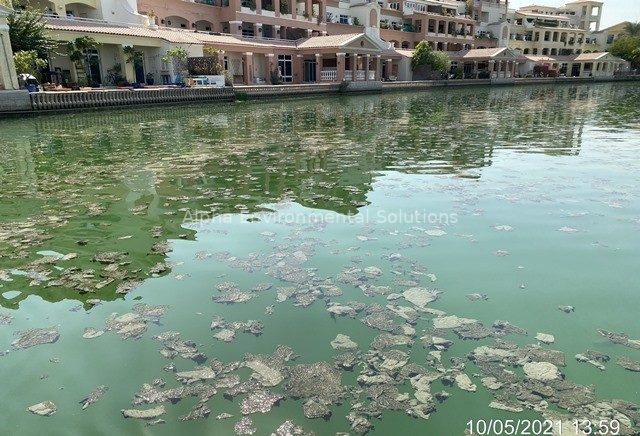
For a developer or a facilities team, an amenity lake is a visible asset that shapes how residents, guests and buyers judge the whole community. A storm can undo months of careful management in a single afternoon, and the cost of recovery is almost always higher than the cost of preparing for the rain in the first place.
What is stormwater runoff, and why do community lakes catch it?
Stormwater runoff is rainwater that cannot soak into the ground and instead flows across the surface. In a landscaped development that surface is mostly hard: roads, car parks, roofs, paved walkways and compacted soil. Very little rain infiltrates, so almost all of it moves downhill at speed, and ornamental lakes and lagoons usually sit at the lowest point of the drainage network. That is by design, because the water body doubles as a collection point, but it also means the lake receives the concentrated dirty water from a catchment many times its own size.
The first flush is the most damaging part. The initial burst of runoff, before the surfaces have been rinsed clean, carries the heaviest load of accumulated dust, fertiliser, oil, litter and fine sediment that has built up on the ground since the last rain. In an arid climate that dry period can run for many months, so the first significant storm of the season delivers an unusually dirty slug of water into the lake in a very short time.
How does heavy rain damage lake water quality?
The damage arrives in layers. The first and most obvious is turbidity: suspended silt and clay cloud the water, block sunlight and settle as a fresh layer of sediment on the bed. The second, and often the more serious, is nutrient loading. Runoff carries nitrogen and phosphorus from fertilised landscaping, soil and organic debris straight into the water. These nutrients are the fuel for algae, which is why a lake frequently looks worse a week after a storm than during it: the silt settles, the sun returns, and the nutrient spike drives a bloom.
Oxygen is the third casualty. The organic material washed in begins to decompose, and decomposition consumes dissolved oxygen. When a bloom that formed after the storm later dies back, that decay consumes still more, and oxygen can crash to levels that stress or kill fish and release foul odours from the bed. Runoff also carries hydrocarbons from roads and car parks, and metals. A 2025 University of Sharjah study of stormwater from two extreme UAE flood events measured iron at up to 2.08 mg/L and aluminium at up to 2.02 mg/L in the runoff itself, alongside potassium, manganese and traces of chromium and nickel. Those iron figures sit right at the 2 mg/L ceiling that Dubai applies to lagoon water, which shows how a single storm can move a lake toward a regulatory breach.
Why is runoff a growing problem across the Middle East?
Two things are changing at once. Rainfall patterns across the Gulf are shifting toward fewer wet days but heavier downpours when they do come, so more water arrives in less time and overwhelms drainage that was sized for gentler rain. At the same time, rapid development has covered more ground with hard, impermeable surfaces, which increases both the volume and the speed of runoff reaching each water body. The record rainfall that hit the UAE in April 2024 showed how quickly a modern, well-drained city can be overwhelmed, and community lakes were among the assets left turbid and polluted in its wake.
Regional authorities are treating the risk seriously. Ahead of the current rainy season, the UAE Ministry of Energy and Infrastructure completed a preventive maintenance programme across 103 federal dams, barriers and water lakes with a combined storage of roughly 80 million cubic metres, and that work explicitly included sediment removal to keep the systems working. The same logic applies at the scale of a single community: a water body that is not prepared before the rain will not cope well during it.
What do DECCA and Gulf regulators expect of a lake after rain?
Ornamental lagoons in Dubai are held to a defined set of water-quality limits. Dubai Municipality’s guidance on environmental clearance sets out 31 parameters for lagoon water in Annex 6, covering physical, chemical and metal measures. The values most exposed by a storm are turbidity (limited to 75 NTU), total suspended solids (50 mg/L), dissolved oxygen (a surface range of 5 to 15 mg/L and above 4 mg/L at the bottom), pH (6 to 9), and metals such as iron (2 mg/L) and aluminium (5 mg/L). A heavy first flush can push turbidity, suspended solids and iron toward or past those limits in one event, and the oxygen sag that follows a bloom can breach the dissolved-oxygen floor days later.
Closed lagoons are the most exposed, because they have little or no exchange to flush a pollutant load back out. Whatever the storm delivers tends to stay, settle and accumulate. That is why the authority in Dubai, now the Dubai Environment and Climate Change Authority (DECCA), expects operators to monitor these water bodies and keep them within range rather than react only when residents complain. Treating a post-storm exceedance as a compliance issue, not just an appearance issue, is the safer position for any developer or community. Alpha Environmental Solutions provides this kind of environmental consultancy and water-quality assessment across the UAE and the wider Middle East.
How can facilities teams protect a community lake before and after the rains?
Most storm damage is preventable, or at least containable, with preparation. The aim is to slow the water down, keep sediment and nutrients out where possible, and be ready to respond fast once the rain stops. The core measures are:
- Lower the lake level ahead of the season. Drawing the water down at least a month before the rains creates storage for the runoff and reduces the risk of overflow and flooding (see the section below).
- Clear the inlets and traps early. Silt traps, gross-pollutant screens and inlet channels should be cleaned before the season so the first flush is intercepted rather than delivered whole into the lake.
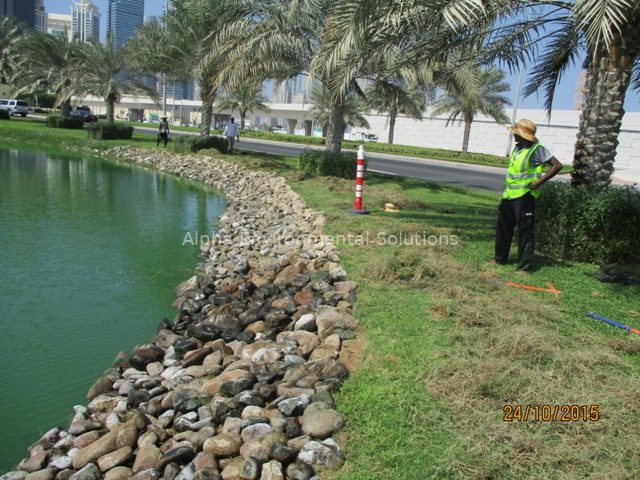
- Stabilise the edges. Sound stone embankments and vegetated buffer strips slow incoming water, filter sediment and resist the erosion that heavy runoff causes at the shoreline.
- Survey the sludge first. Knowing how much sediment already sits on the bed tells you how little spare capacity the lake has to absorb a fresh silt load, and whether removal is due.
- Keep aeration and circulation ready. Working aerators help the water recover oxygen quickly after the organic load and any bloom drive it down.
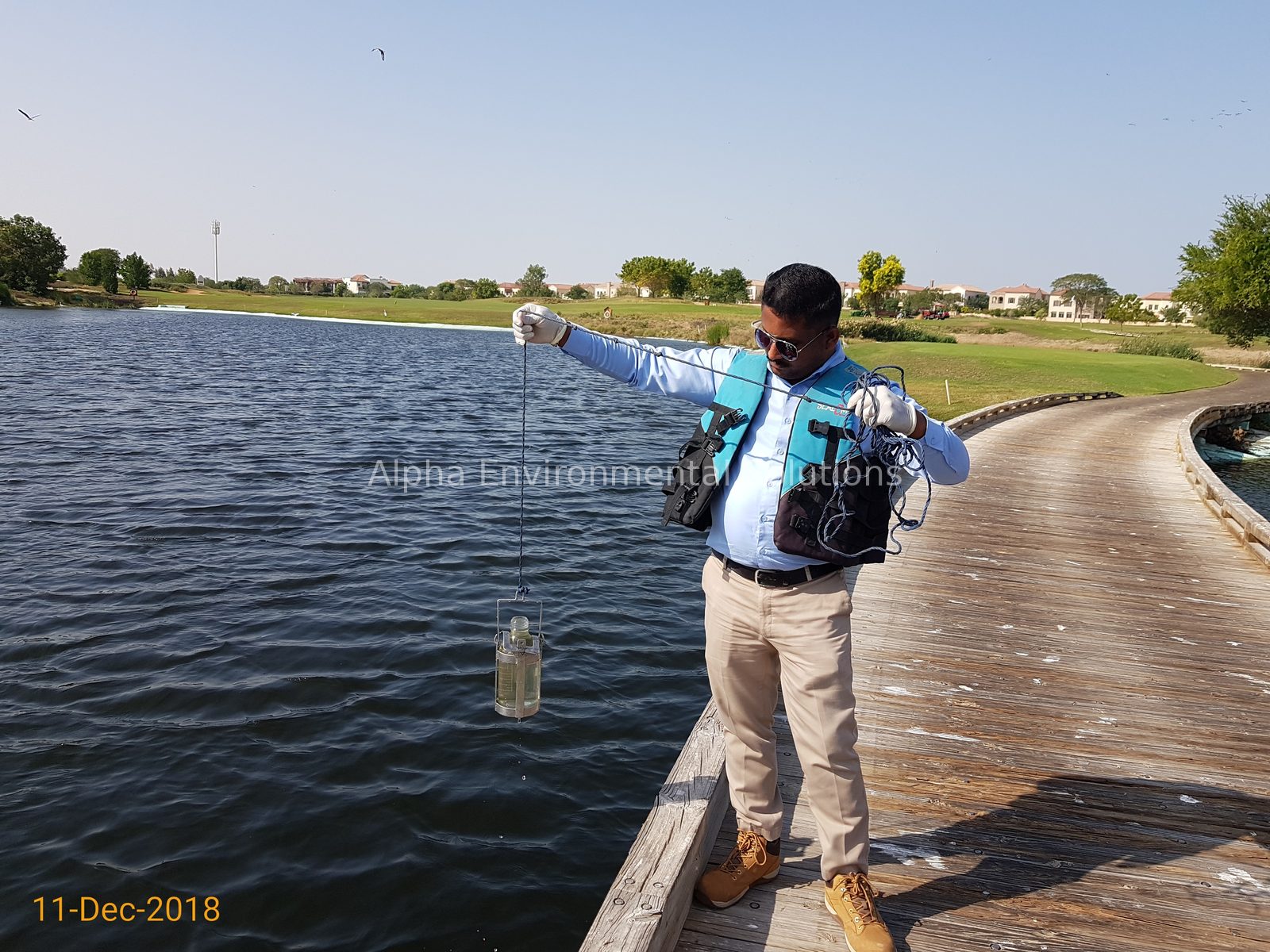
- Test the water after the storm. Sampling within a day or two catches turbidity, nutrient and oxygen problems while they can still be corrected.
- Act on blooms quickly. A nutrient spike often triggers algae within a week, so early treatment prevents a short-lived problem from becoming a persistent one.
Several of these measures map directly to established services: lake shore and embankment protection to control erosion at the water’s edge, sludge removal to restore capacity on a bed that a storm has topped up, aeration systems to defend dissolved oxygen, and ongoing lake management to hold the whole system in balance through the season. The relationship between silt build-up and water quality is covered further in our guide to shoreline and embankment erosion, and the bloom risk that follows a nutrient spike in our article on blue-green algae in community lakes.
Lower the lake level at least a month before the rains
One measure deserves its own place in the pre-season plan: lowering the lake level before the rainy season begins. A lake held at its full operating level has almost no spare volume. Every cubic metre of storm runoff that arrives must either be stored somewhere or pass over the banks, spill through the overflows and flood the surrounding paths, roads and properties. Drawing the water down in advance creates storage, which is the cheapest flood protection a lake can offer. Across the UAE and the wider Gulf the wetter months run from late autumn into early spring, and forecasts give little warning of an intense cell, so our recommendation is to start the drawdown at least one month before the season, not when a storm is already forecast.
The drawdown must be controlled, not rushed. Lower the level in stages over several days or weeks, because a rapid fall can destabilise saturated banks and liners and expose edges that were never designed to be dry. Confirm where the water will go and that the discharge point, whether a storm drain, an irrigation network or a tanker route, has the capacity and the permission to take it: pumping lake water into a drain that must also carry the rain defeats the purpose, and discharge may need authority approval and a water-quality check first. Check that aerators, fountains and intake lines stay submerged and working at the lower level, watch dissolved oxygen as the volume falls to protect fish, and mark the target level against a fixed gauge. Refill gradually after the season, using the rain itself where possible. Our lake management team sets the target level for each lake from its volume, outlet capacity and bank design, because no single figure suits every lake.
Turning a storm risk into a managed routine
Rain is not the enemy of a community lake, but unmanaged runoff is. The developments that come through a wet season with clear, compliant water are the ones that prepared for it: inlets cleared, edges stable, sediment under control, aeration running and a testing plan in place for the days after each storm. Those that treat the lake as an afterthought tend to spend far more on emergency recovery, and to carry the reputational cost of a green, foul-smelling amenity in full view of residents. With the Gulf’s rainfall becoming heavier when it arrives, the sensible position is to plan for the storm before the clouds gather.
Alpha Environmental Solutions has managed lakes, lagoons and shorelines across the UAE and the wider Middle East since 2007. If you want your community’s water body assessed and prepared before the rains, or recovered after a storm has already hit it, contact our team on +971 4 338 6660 or info@alphasolutions.ae, or through our contact page.
Frequently asked questions
Does rain clean a community lake?
No. It is a common assumption, but rain does the opposite. Stormwater runoff loads the lake with silt, nutrients, hydrocarbons and metals collected from the surrounding roads and landscaping. The water may look temporarily fuller, but its quality drops, and the nutrient load often triggers an algae bloom in the days that follow.
Why does the lake turn green a week after the rain, not during it?
During the storm the water is turbid and sunlight is blocked, so algae cannot grow quickly. Once the silt settles and the sun returns, the nitrogen and phosphorus delivered by the runoff act as fuel, and a bloom develops. The lag of several days to a week between the storm and the green water is normal.
Can a single storm breach lagoon water-quality limits?
Yes. A heavy first flush can lift turbidity and suspended solids past the limits Dubai sets for lagoon water (75 NTU and 50 mg/L), and runoff has been measured carrying iron close to the 2 mg/L ceiling. The oxygen sag that follows a post-storm bloom can also breach the dissolved-oxygen floor days later, which is why testing after rain matters.
How do we stop runoff damaging our lagoon?
You cannot stop the rain, but you can slow and filter the water. Clean silt traps and inlets before the season, keep embankments and vegetated buffers in good order, remove accumulated sludge so the bed has spare capacity, and keep aeration ready. A closed lagoon with little exchange needs the most attention, because it cannot flush a pollutant load back out.
How soon should we test the water after a storm?
Within one to two days. Early sampling catches turbidity, nutrient and oxygen problems while they can still be corrected cheaply, before a bloom takes hold or oxygen crashes far enough to threaten fish. Waiting until the water looks or smells bad usually means the lake has already been deteriorating for a week or more.