
A lake maintenance contract in Dubai should pay the contractor for measured water quality and documented response, not for the number of visits made. Our guide to choosing a lake management company in Dubai covers what to check before signing. Contracts written around visit frequency and a vague promise to keep the lake clean leave the community with no way to prove failure until algae, odour or a regulator’s letter arrives. The safer approach is to name the parameters to be held, the threshold that triggers action, the time allowed to respond and the records the contractor must hand over each month. This article sets out what those terms look like for UAE and wider Middle East community lakes.
Why do lake maintenance contracts fail communities?
Most failures start with scope written in the language of cleaning. A schedule that lists skimming, weekly inspection and “general lake care” describes labour, not outcome. When water turns green or smells of sulphide, the contractor can show that every visit took place and the contract was technically met. The community has paid for activity, and the lake still failed.
The second cause is a scope that stops at the water surface. Sludge on the bed, aerators that no one services and eroding banks all drive the symptoms a contractor is blamed for, yet they sit outside many agreements. Our team has seen lakes where the surface work was done faithfully while dissolved oxygen collapsed at the bottom because the aeration equipment had not been checked for months.
The third cause is silence. Without required reporting, a facilities manager learns about a decline from residents, not from data. By then the corrective work is larger and more expensive than early action would have been. A good contract is built to prevent this chain, and the sections below follow the order in which the terms should be written.
Which water-quality measures should the contract name?
A contract should list specific parameters, how often each is measured, and the value at which the contractor must act. Dubai Municipality’s guidance on Environmental Clearance requirements sets 31 lagoon water-quality parameters in Annex 6, and it is a sensible reference point for communities whose lakes fall under that framework. Our guide to what DECCA checks and what the rules require explains the full set.
For day-to-day management, a short list of indicators is usually enough to spot trouble early. These are the items we would expect to see written into the schedule:
- Dissolved oxygen at the surface and near the bed, measured against the Annex 6 ranges of 5 to 15 mg/L at the surface and above 4 mg/L at the bottom.
- Turbidity and pH, with the Annex 6 limits of 75 NTU and a pH of 6 to 9 as reference values.
- Visible algae cover, recorded as a percentage of the surface with dated photographs from fixed points.
- Sludge depth at agreed sampling points, repeated at least once a year so the trend is visible.
- Odour complaints logged by residents or staff, with the date, location and the action taken.
- Equipment status for aerators, pumps and fountains, including the date of the last service.
Reference values from a regulator’s guidance are not a substitute for a site-specific baseline. A lake fed with recycled irrigation water behaves differently from one topped up with desalinated supply, so the contract should require a first-month baseline survey and then set targets against it.

How fast should the contractor have to respond?
Response time is where a contract either has teeth or does not. A clause saying the contractor will attend “promptly” cannot be enforced. A usable clause sets tiers: for example, acknowledgement of a reported problem within a set number of hours, a site visit within a defined working period, and a written corrective plan after that. Urgent events such as a fish kill, a strong sulphide odour or a failed aerator in summer should sit in the fastest tier.
Summer deserves its own wording. Warm water holds less oxygen, and a stalled aerator in July can turn into a fish kill within days. Our article on why dissolved oxygen decides lake water quality explains the mechanism. A contract that treats a July equipment fault the same as a January one misses the risk.
Include a clause for repeat failures as well. If the same parameter breaches its threshold in consecutive months, the contractor should be required to submit a root-cause review rather than repeat the same treatment. Without it, communities pay for the same temporary fix again and again.
What reporting and records should the contract require?
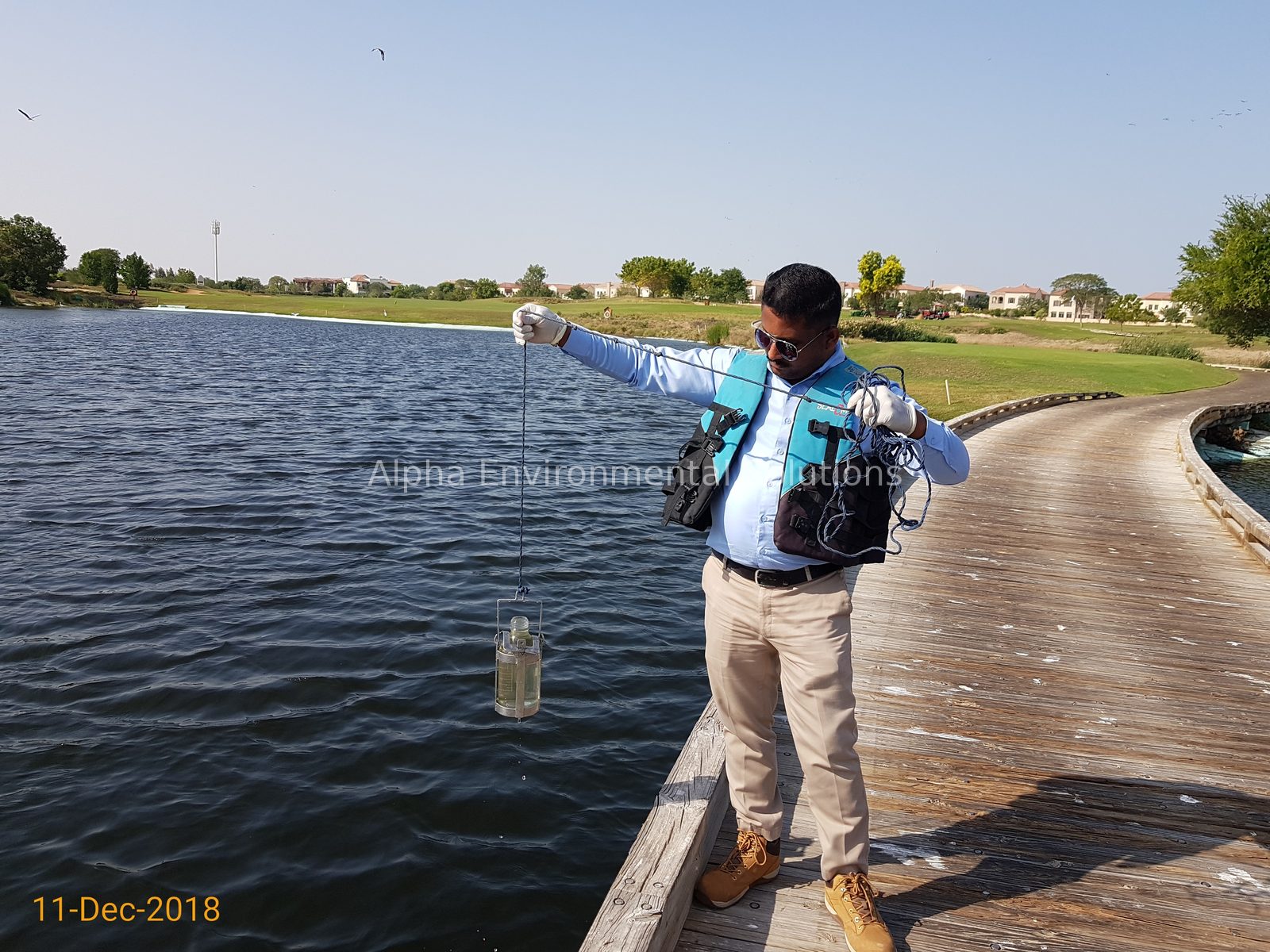
Monthly reporting should be a deliverable, not a courtesy. The report should carry the measured values against each threshold, dated photographs from fixed points, a log of complaints and responses, treatment products used with quantities, and equipment service records. Chemical and biological treatments should be recorded by product and dose, because the community must know what has entered its water.
Records have a second purpose that is easy to overlook. When a lake changes hands between developer and owners’ association, or when the maintenance contractor changes, the history is the only evidence of how the water body has behaved. Our lake handover checklist covers what a new owner should ask for, and continuous contractor records make that request far easier to meet.
Ask for raw laboratory certificates where samples are sent out, not only a summary table. Where a third-party laboratory is used, the contract should say who selects it and who pays, so results are independent of the party being measured.
Which scope items are most often left out?
Four items regularly fall between contracts. Sludge is the first. Organic material builds up on the lake bed over years and feeds algae and odour, but removal is usually priced as a separate project. The contract should at least require periodic depth surveys and a trigger level for sludge removal. The second is aeration, where a contractor may be responsible for water quality but not for the aeration systems that protect it.
Banks and edges are the third. Slumping or eroded edges release silt and cloud the water, yet they are a civil matter that a water-quality contractor may not touch. The fourth is pests, since midge and mosquito breeding often follows nutrient and weed problems. The contract should say who owns each interface, so that no defect is passed between two suppliers.
Cost allocation needs the same clarity. A lump-sum fee can hide the fact that out-of-scope work is quoted separately at the moment of crisis, when the community has least bargaining power. Pre-agreed unit rates for sludge removal, extra treatments and emergency call-outs remove that pressure. Budget planning is covered in our guide to lake maintenance budgets.
How should the contract handle termination and handover?
Exit terms are written for the day the relationship ends badly. The contract should require the outgoing contractor to hand over monitoring data, equipment records, chemical inventories and site drawings within a fixed period, and it should keep the incoming supplier from having to rediscover the lake from scratch. Retention of a final payment until handover is complete is a common and reasonable lever.
Competence should be tested before signing, not after. Ask bidders for evidence of work on comparable lakes in the UAE climate, the qualifications of the staff who will attend the site and the laboratory arrangements they use. A supplier who has managed lakes since before the last two summers will have seen the failure modes this article describes.
Frequently asked questions
What should a lake maintenance contract in Dubai include?
It should list the water-quality parameters to be held, the threshold that triggers action, response times by severity, monthly reporting, equipment responsibilities and clear exit terms. Scope should name sludge, aeration, banks and pest control, or state plainly who owns each.
Which water-quality parameters are worth measuring monthly?
Dissolved oxygen at the surface and bottom, turbidity, pH, algae cover and sludge depth cover most early warning signs. Dubai Municipality’s Annex 6 gives reference ranges for several of these, such as dissolved oxygen of 5 to 15 mg/L at the surface and above 4 mg/L at the bottom.
Should a contractor be paid per visit or per result?
Visit-based payment rewards activity, not outcomes. A fixed fee linked to agreed water-quality thresholds, with a defined remedy if they are breached, aligns the contractor with the result the community actually needs.
Who should own aeration equipment and sludge removal in the contract?
Whoever is responsible for water quality should have a clear duty for the systems that protect it. If aeration and sludge removal sit with other suppliers, the contract should state the interface and require shared reporting.
How often should a lake maintenance contract be reviewed?
Review it at least annually, and after any significant event such as a fish kill, a regulator’s notice or a change of owner. Summer performance data is a useful basis for the review.
Next steps for facilities and property managers
A weak lake contract is a risk that sits unseen until the first bad summer. Before the next renewal, compare your current agreement with the points above: are thresholds named, are response times measurable, is reporting required, and does the scope cover sludge, aeration and banks? Gaps found now are cheaper to close than gaps found during a fish kill.
Alpha Environmental Solutions has managed lakes, lagoons and waterbodies across the UAE and Middle East since 2007, and can review an existing contract or set up a measured management programme through our lake management service, with support from our environmental consultancy team where baseline surveys or regulatory guidance are needed. Edges and banks can be assessed under lake shore and embankment protection. Call +971 4 338 6660, email info@alphasolutions.ae or contact us online.