
If your community lake is sitting lower than it did in spring and the water looks cloudier, saltier or greener than it should, evaporation is the likely reason, though it is not the only one. Across the UAE a summer of extreme heat pulls water off every open lake and lagoon far faster than it can be replaced, and what stays behind becomes more concentrated. The salts, nutrients and minerals that were dissolved in a full lake do not evaporate with the water, so they build up in a shrinking volume. Rising salinity is the result, and it stresses fish and plants, feeds algae and can push a water body outside the limits its regulator expects. This article explains why levels fall so fast in a UAE summer, how to rule out a liner leak, what rising salinity does to your water, and the practical steps that keep an ornamental or irrigation lake healthy through the hottest months.
Why do community lake levels drop so fast in a UAE summer?
The UAE is one of the most evaporative environments on earth. Open water in Dubai loses roughly 9.5 mm a day as an annual average, and the country records around 3,300 mm of evaporation a year against barely 100 mm of rainfall. In the peak of summer, with air temperatures well above 40 degrees Celsius and long hours of intense sun, daily losses run higher still. For a lake, that means the surface can drop by a centimetre or more every day with no top-up, and a shallow ornamental water body can lose a visible band of shoreline within a couple of weeks.
The important point is what evaporation leaves behind. Only pure water leaves the surface as vapour. Every dissolved salt, every nutrient and every mineral stays in the lake, now spread through less water. A lake that loses a fifth of its volume to evaporation without fresh dilution becomes roughly a fifth more concentrated in everything it was carrying. Over a long summer, and over successive summers, that concentration climbs. This is why a water body that behaved perfectly well in cooler months can drift into trouble by August: nothing new has been added, but the chemistry has quietly tightened.
Is it evaporation, or a leak in the liner?
Before you put a falling level down to evaporation, confirm that evaporation is actually the cause. Many UAE lakes are built on a plastic (HDPE or similar) liner laid across the bed to hold water in over a sandy, free-draining subsurface. If that liner is punctured, has a failed weld seam, or has been damaged during planting or maintenance, water escapes through the base and the level drops for a reason no amount of top-up will cure. A leak and high evaporation look identical from the shoreline, so the two must be told apart by test, not by assumption.
The standard check is a simple evaporation test. A container of water, or a marked gauge, is floated or fixed in the lake so it loses water to the same sun and wind as the lake but cannot leak. Over a fixed period, usually a few days, the drop in the sealed container is compared with the drop in the lake. If the lake and the container fall by about the same amount, the loss is evaporation and the liner is sound. If the lake falls faster than the container, the difference is escaping through the base and you have a leak to find and repair. Running this test first prevents the costly mistake of repeatedly refilling a leaking lake, which wastes water, drives up salinity through constant top-up, and hides a liner failure that only gets worse.
What top-up water adds to the problem
Once evaporation is confirmed as the cause, the water used to top the lake back up matters as much as the loss itself. UAE lakes are refilled from one of three sources, and each carries a different salt load. Treated sewage effluent (TSE) is delivered through a dedicated network to the majority of large landscapes in the country; it is sustainable but saltier than potable water and rich in residual nutrients such as nitrogen and phosphorus. Groundwater across much of the UAE is naturally brackish, so it can be saltier still. Fresh (desalinated) water is the lowest in salt but the most expensive, so it is used sparingly. Whichever source feeds your lake, topping up under high evaporation means adding salts and, in the case of TSE, nutrients on top of those the evaporation has already concentrated.
The trap is that topping up feels like a cure. The level comes back, the shoreline looks normal again, and the assumption is that the lake has been reset. It has not. The water is fuller but also saltier and, with TSE, more nutrient-rich than before, because you have added salts and nutrients on top of those the evaporation left behind. A study of an artificial lake supplied with treated wastewater in Dubai found microbiological readings above national standards, a reminder that recycled top-up water changes the water chemistry and needs to be managed, not simply poured in. Without dilution, a bleed-off or active treatment, salinity ratchets upward season after season.
Why storm-water evaporation ponds concentrate the fastest
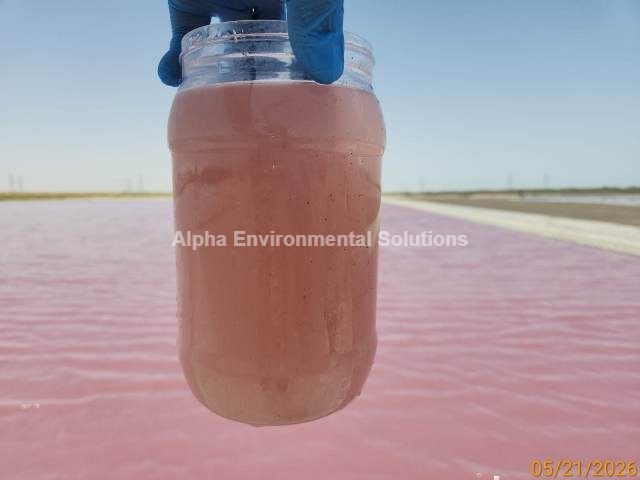
Many water bodies in UAE communities are not decorative lakes at all but storm-water evaporation ponds, designed to collect surface run-off and let it evaporate away. These ponds typically have an inlet but no outlet, so water only ever enters and leaves by evaporation. That design has a built-in consequence for water quality: because nothing flows out, there is no flushing, and every salt, nutrient and pollutant that arrives with the run-off or the top-up stays in the pond and concentrates as the water evaporates. Over time an inlet-only pond becomes markedly saltier and more nutrient-loaded than a lake that is exchanged or bled off, which is why these ponds are often the first in a community to turn saline, green or odorous in summer. If your water body is an evaporation pond, assume concentration is happening and monitor it closely, because the pond has no natural way to relieve itself.
What rising salinity actually does to a lake
Salinity is measured through total dissolved solids (TDS) or electrical conductivity, and it matters because most ornamental fish and aquatic plants tolerate only a limited range. As TDS climbs, the water becomes physiologically harder for freshwater or brackish-tolerant species to live in. Combined with the low oxygen that already comes with hot water, rising salinity is an added stress that can tip a stocked lake toward fish stress and loss. Shoreline planting suffers too, with salt-sensitive ornamental species showing poor growth, leaf burn and dieback as the water they are irrigated or fed by grows saltier.
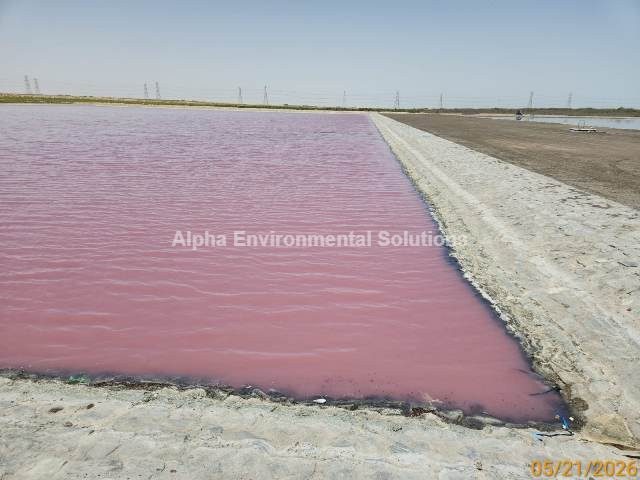
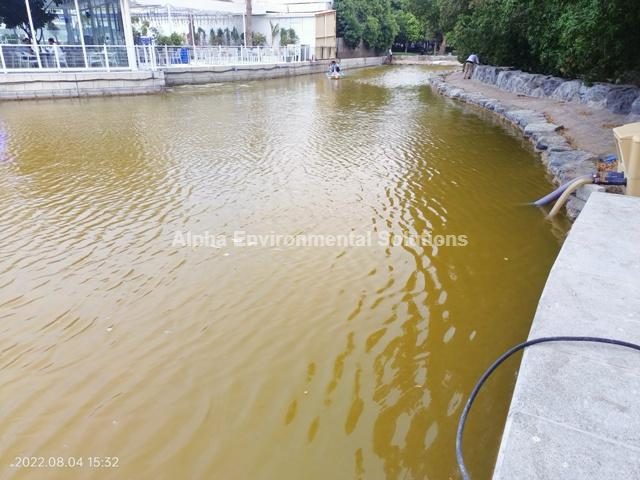
Concentration also drives the appearance problems that generate complaints. As nutrients concentrate, algae have more to feed on, so blooms become more likely and more persistent through summer. The water can turn green, cloudy or milky, scum can gather at downwind edges, and an odour can develop as organic matter builds and decays in warm, poorly mixed water. For a facilities or property team, these are the visible symptoms that residents notice first, but the underlying driver is often the invisible one: a lake that has been allowed to concentrate all summer without anyone measuring how far it has gone.
Why this is a compliance risk, not just an aesthetic one
In Dubai, lakes and other water bodies are monitored by the authorities for water quality and public-health pests. Where a water body fails the set maximum thresholds for physical, chemical or microbiological parameters, or is found with a pest infestation, the responsible property can face fines and possible closure of the water body until the problem is resolved. Rising salinity, elevated nutrients and the algae and odour that follow all feed directly into those parameters. A lake left to concentrate through summer is therefore not only an eyesore; it is a regulatory exposure for the developer or community that owns it.
The reason timely action matters is that concentration is cumulative and slow to notice. There is no single dramatic event, just a gradual drift, until a bloom, a fish loss or an inspection makes it visible all at once. By then the cheapest and easiest interventions have been missed. Reading the numbers early, while the water is only mildly concentrated, is far less costly than reacting after a failure. For context on how the regulator assesses a water body, see our guide to lake water quality monitoring in Dubai and what DECCA checks.
How to protect a community lake through the summer
Managing a concentrating lake is about measurement, dilution and circulation working together. You cannot stop evaporation in a UAE summer, but you can stop it from quietly degrading your water. A sound summer routine combines the following steps.
- Confirm the cause of any level drop with an evaporation test before topping up, so a liner leak is not mistaken for evaporation.
- Measure salinity and TDS regularly, at least weekly through the hottest months, so you know how far the lake has concentrated rather than guessing from its appearance.
- Track the top-up: record how much water is added and from which source (TSE, groundwater or fresh), and test its salinity, so you understand what each refill contributes.
- Manage nutrients at source by removing organic sludge and controlling algae and weed, so concentration has less to feed on.
- Keep the water moving with aeration or a fountain, holding oxygen up and preventing the stagnant, stratified conditions where problems concentrate.
- Plan a dilution or partial exchange where salinity approaches the tolerance of your fish, plants or regulatory limits, especially for inlet-only evaporation ponds that cannot flush themselves.
Since 2007, Alpha Environmental Solutions has managed ornamental and irrigation lakes across the UAE through exactly these summers. In practice, the lakes that come through the heat well are the ones where someone is reading the water, not just watching the level. Our environmental consultancy team samples and analyses lake water so salinity, nutrients and oxygen are tracked as numbers, and our lake management service acts on those numbers before the water turns.
The role of aeration and circulation
Aeration will not lower salinity, and it is important to be honest about that: only dilution or removal reduces dissolved salts. What circulation does is manage the consequences. Moving water holds more oxygen and resists the thermal layering that lets the bottom of a lake go anoxic in summer, which is what releases nutrients from sludge and drives odour. By keeping the whole water column mixed and oxygenated, an aeration system or floating fountain slows the chain of events that turns a concentrated lake into a green, smelling one. It buys stability while the salinity itself is managed through monitoring and dilution.
Sludge is the other half of the picture. Organic sediment on the bed is a store of nutrients that concentration and warm water release back into the water column. Removing it through sludge removal lowers the nutrient load a summer lake has to carry, which in turn limits how badly rising nutrients can drive algae. Read alongside our note on why community lakes smell of rotten eggs in summer, the message is consistent: the less organic material and the more circulation a lake has going into the heat, the better it withstands concentration.
Frequently asked questions
How much water does a lake lose to evaporation in a UAE summer?
Open water in Dubai loses roughly 9.5 mm a day as an annual average, with the country recording around 3,300 mm of evaporation a year against about 100 mm of rainfall. In peak summer, with temperatures above 40 degrees Celsius, daily losses run higher, so a lake surface can fall a centimetre or more each day without top-up.
How do I know if my lake is leaking or just evaporating?
Run an evaporation test. Float or fix a sealed container of water in the lake so it loses water to the same sun and wind but cannot leak, then compare its drop with the lake’s drop over a few days. If both fall by about the same amount, the loss is evaporation and the liner is sound. If the lake falls faster, the difference is leaking through the base and the liner needs inspection and repair.
Why does salinity rise when a lake evaporates?
Only pure water leaves the lake as vapour. The dissolved salts, nutrients and minerals stay behind in a smaller volume of water, so their concentration increases. A lake that loses part of its volume without fresh dilution becomes proportionally saltier in everything it was carrying, and topping up with TSE or brackish groundwater adds further salt on top of that.
Why do storm-water evaporation ponds get so salty?
Storm-water evaporation ponds usually have an inlet but no outlet, so water leaves only by evaporation and there is no flushing. Every salt and nutrient that arrives stays in the pond and concentrates as the water evaporates, so these inlet-only ponds turn saline and nutrient-loaded faster than lakes that are exchanged or bled off, and need close monitoring and planned dilution.
Can rising salinity lead to fines?
Indirectly, yes. In Dubai the authorities monitor lakes for water quality, and a water body that fails the set physical, chemical or microbiological thresholds can face fines and possible closure until it is corrected. Rising salinity, concentrated nutrients and the algae and odour that follow all feed into those parameters, so an unmanaged summer lake is a compliance exposure.
Act before your lake concentrates
Falling levels and rising salinity are predictable every UAE summer, and they are manageable when someone is reading the water rather than only watching the shoreline. If your community or irrigation lake is dropping, looking cloudy or turning green as the heat peaks, have it tested now, both to rule out a liner leak and to measure how far the water has concentrated, while the fixes are still simple. Alpha Environmental Solutions has kept UAE lakes healthy through these summers since 2007. Call us on +971 4 338 6660 or email info@alphasolutions.ae, or visit our contact page, to arrange water testing and a summer management plan for your water body.