
Beach algae along the UAE coast comes mainly from two sources: harmful algal blooms, commonly known as red tide, and marine algae that wash ashore and pile up on the sand. Both are driven by the same underlying conditions: warm Gulf water, added nutrients from wastewater and fertiliser, and calm seas that let algae concentrate. On the shoreline the result is discoloured water, thick mats of decaying algae, strong odours and, during severe blooms, dead fish along the tide line. For a hotel, resort, beach club or coastal community, that is a direct threat to guest experience, health and reputation. Managing it means prompt mechanical cleaning, safe disposal, water monitoring and close coordination with local authorities.
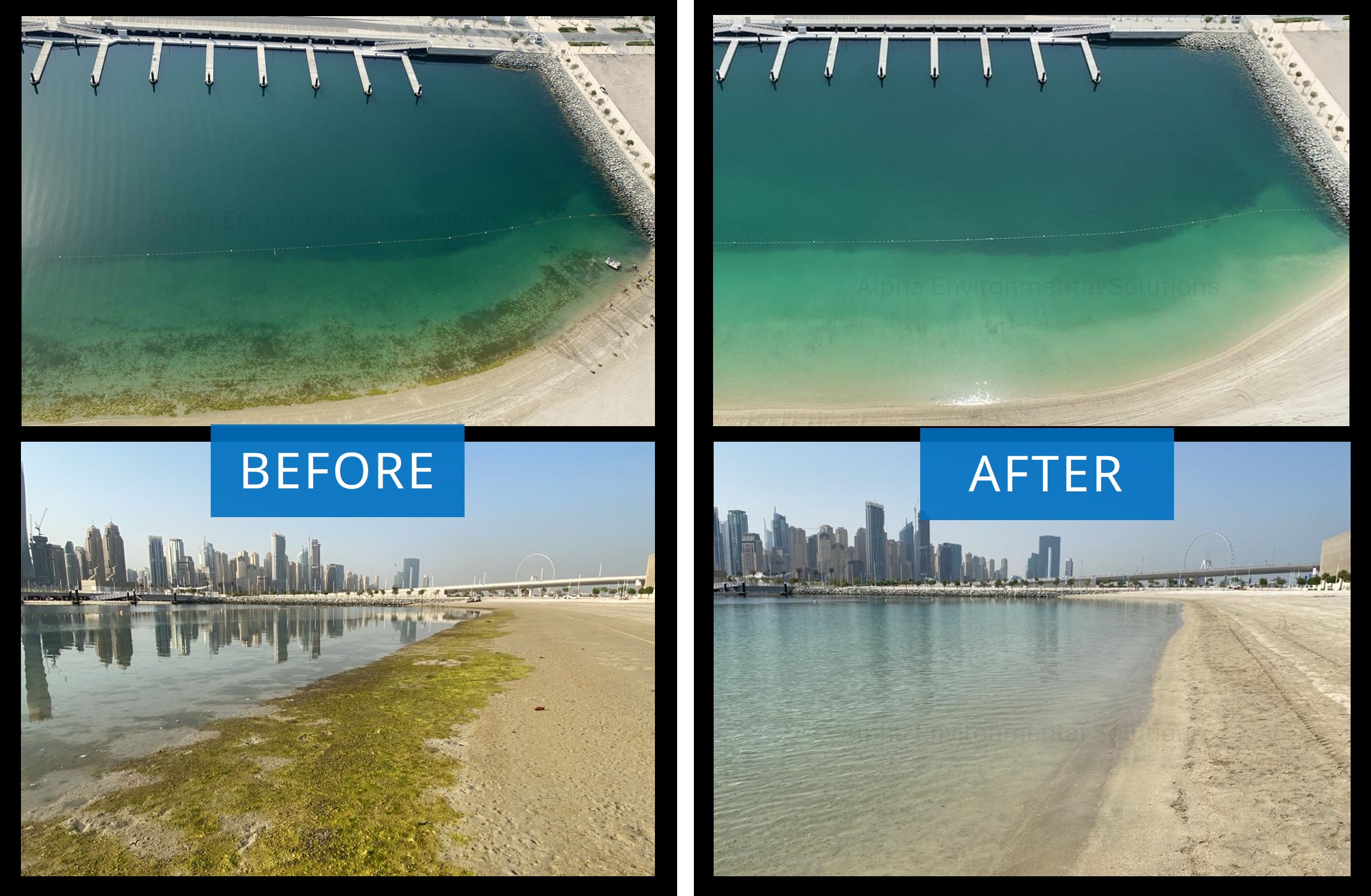
The Arabian Gulf is one of the most bloom-prone seas in the world. Researchers have recorded an average of around three harmful algal bloom outbreaks a year in the Gulf over the past three decades, and several have caused large-scale fish kills. For anyone responsible for a stretch of UAE beach, the question is not whether algae will arrive, but how quickly and effectively it can be dealt with when it does.
What is red tide, and why does it reach UAE beaches?
Red tide is the common name for a harmful algal bloom, a rapid increase in microscopic marine algae that can discolour the water red, brown or green. Not every bloom is toxic, but many release compounds that irritate skin, eyes and airways, and the sheer mass of algae strips oxygen from the water as it decays. When a bloom collapses, the dead algae and any fish killed alongside it are pushed onto the shore by wind and current. That is the moment a bloom offshore becomes a cleaning problem on the beach.
The Gulf is especially vulnerable. It is shallow, warm and enclosed, with limited exchange of water to flush blooms out. One severe event in 2008 and 2009, caused by the organism Cochlodinium polykrikoides, spread so widely that it disrupted marine life across the region and forced some desalination plants to reduce or halt operations.

What causes algal blooms in the Arabian Gulf?
Blooms need three things: warmth, nutrients and calm conditions, and the Gulf supplies all three for much of the year. Water temperatures are high and rising, which speeds algae growth. Calm, stratified seas let algae gather near the surface instead of dispersing. The variable ingredient is nutrients, and that is increasingly supplied by human activity.
Recent research links Gulf blooms to nutrient enrichment from wastewater and effluent discharges, alongside runoff carrying agricultural and landscaping fertiliser. Episodic sewer overflows and wind-driven resuspension of seabed sediment add further pulses of nutrients. In short, the conditions that make the Gulf beautiful also make it bloom, and human nutrient inputs are tipping the balance further each year.
Why is beach algae a business risk, not just an eyesore?
It is easy to treat washed-up algae as a cosmetic nuisance. For a coastal business it is considerably more than that.
The most immediate risk is to health and safety. Decaying algae produces hydrogen sulphide, the source of the rotten-egg smell, and some blooms release irritants that can affect guests and staff, particularly anyone with respiratory conditions. Reputational risk follows close behind: guests photograph a fouled beach and share it, and a single bad bloom can undo months of marketing. Operationally, a heavy bloom can force a beach or swimming area to close, cancel water sports and events, and trigger refunds. At regional scale, blooms have even disrupted desalination plants, which supply most of the drinking water in the Gulf. A beach that is not cleaned quickly and correctly turns a natural event into a lasting commercial problem.

How is beach algae safely cleaned and removed?
Effective beach and marine algae cleaning is about speed, the right equipment and proper disposal. Left in place, algae decays, smells worse and becomes harder to remove as it dries and binds with the sand. Cleaning usually combines mechanical and manual methods:
- Rapid response. Algae is removed while it is fresh, before it decomposes and the odour intensifies.
- Mechanical collection. Beach-cleaning machinery and rakes lift algae and dead marine matter from the sand efficiently over large areas.
- Manual finishing. Crews clear rocks, tide pools and areas machinery cannot reach, and separate debris from the sand.
- Safe disposal. Collected material is removed to approved sites rather than buried on the beach, where it would continue to rot and leach nutrients.
- Water and shoreline monitoring. Sampling tracks whether the bloom is clearing or returning, and informs decisions about reopening the beach.
Timing matters as much as method. A shoreline cleared within hours of algae arriving recovers far faster than one left until the smell forces action.
Can algal blooms be prevented?
No one can switch off a red tide once it is under way; blooms are driven by regional ocean conditions that no single property controls. What can be managed is the nutrient load that makes blooms larger and more frequent, and the speed of the response when one hits.
On the prevention side, reducing nutrient inputs helps over time: controlling fertiliser use in coastal landscaping, managing wastewater and drainage properly, and avoiding discharges that feed coastal waters. The UAE operates a national red tide monitoring effort that uses satellite observation to track blooms and provide early warning, coordinated with regional marine bodies. For an individual property, the practical form of prevention is preparation: knowing the early signs, having a cleaning contractor on call, and acting on the first warning rather than the first complaint.
What should a coastal property do during an active bloom?
When a bloom reaches your shoreline, a clear plan limits the damage:
- Act early. Begin cleaning as soon as algae appears, not once it has decayed.
- Protect people. Restrict access to affected water where irritation or strong odour is present, and communicate clearly with guests.
- Clean thoroughly. Remove algae and any dead marine life from sand, rocks and tide lines, and dispose of it properly.
- Monitor the water. Sample regularly to judge when conditions are safe to reopen.
- Coordinate. Stay in contact with local authorities and follow official guidance, particularly during widespread events.
Frequently asked questions
Is it safe to swim during a red tide?
It depends on the bloom. Some are harmless, but others release toxins that irritate skin, eyes and airways, and low oxygen can leave dead fish in the water. During an active bloom it is safest to keep people out of affected water until testing and official guidance confirm it has cleared.
How long does a red tide last?
There is no fixed duration. A bloom can clear in a few days or persist for weeks, depending on water temperature, nutrient levels and sea conditions. Because the timing is unpredictable, the priority is a fast cleaning response whenever algae reaches the shore.
Does washed-up algae damage the beach itself?
Left to rot, yes. Decaying algae depletes oxygen at the shoreline, produces strong odours and leaches nutrients back into the sand and water, which can feed further growth. Prompt removal and proper disposal prevent that cycle.
Can you prevent algae from reaching our beach?
No contractor can stop a regional bloom, but you can reduce the nutrient inputs that make blooms worse and put a rapid-response cleaning plan in place so algae is removed before it decays. Preparation and speed are what limit the impact.
How quickly can a beach be cleaned after a bloom?
With the right equipment and crew on call, a shoreline can be cleared within hours to a day, depending on the length of beach and the volume of algae. The sooner cleaning starts, the faster and cheaper the recovery.
Alpha Environmental Solutions has cleaned and maintained UAE shorelines and managed marine algae for coastal developments, hotels and public beaches since 2007. Whether you need a rapid response to an active bloom or a standing beach-cleaning programme through the season, our team can assess your shoreline and put a plan in place. Call +971 4 338 6660 or email info@alphasolutions.ae.